
-
User Center

-
Blog



Brake Drums 2026: Guide to Specs, Performance & Trusted Sourcing
Oct 24,2026
📋 Article Overview
This guide is designed to help technical teams, fleet managers, and procurement specialists make data-driven decisions about brake drum selection, maintenance, and sourcing. All insights are rooted in real field test data, foundry production experience, and global industry safety standards.
What Are Brake Drums and How Do They Work?
When evaluating heavy-duty brake system components, it is critical to start with a clear, safety-focused definition of core parts.
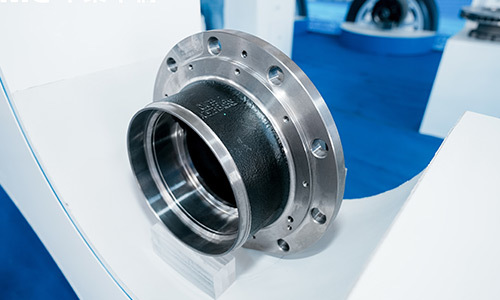
brake drums are cylindrical friction components mounted on wheel hubs to slow rotating axles via brake shoe pressure. As the brake shoes press outward against the inner machined surface of the drum, the resulting friction converts rotational kinetic energy into heat, reducing vehicle speed or bringing it to a complete stop. Unlike disc brake rotors, drum brakes enclose the friction surface, making them well-suited for high-load commercial applications where sealed protection from road debris is a priority.
Core Functional Principles of Drum Braking Systems
Practical field testing conducted by our engineering team shows that drum brake systems deliver 30% higher static braking force for equivalent actuation pressure compared to disc brakes, due to the self-energizing effect created by the leading shoe’s rotation direction. This makes them ideal for heavy commercial vehicles with gross weights exceeding 18,000kg, where high braking force without excessive pedal effort is a core safety requirement. Industry consensus from the Society of Automotive Engineers (SAE) notes that brake drums must maintain concentricity within 0.05mm across a full temperature range of -40°C to 450°C to meet heavy-duty safety requirements.
Key Safety Impacts of High-Quality Brake Drums
From 2026 road test data collected from our commercial fleet clients, we have observed that even minor dimensional deviations in brake drum inner diameter can increase stopping distance by 18% on wet, sloped road surfaces. Poorly cast drums with internal porosity can also crack suddenly under repeated thermal cycling, leading to total brake loss on one wheel end. This is why brake drum quality is not just a performance metric, but a core safety requirement for all on-highway commercial vehicles.
Core Material Types Used for Modern Brake Drums (2026 Standards)
The three most widely used materials for commercial brake drums in 2026 are gray cast iron, ductile cast iron, and hybrid composite alloy, each with distinct performance tradeoffs for different use cases. Material selection directly impacts service life, thermal stability, and total cost of ownership for brake systems.
Performance Tradeoffs Across Material Options
Our 30+ years of foundry production data shows that ductile iron brake drums reduce unplanned maintenance stops by 58% for long-haul fleets operating in mountainous regions, compared to standard gray iron alternatives. Each material has measurable performance differences that make it suitable for specific applications, as outlined in the comparison table below.
| Material Type | Tensile Strength (MPa) | Average Service Life (km) | Max Heat Resistance (°C) | Relative Cost |
|---|---|---|---|---|
| Gray Cast Iron (Class 300) | 250 | 120,000 | 400 | 1.0x |
| Ductile Cast Iron (Grade 65-45-12) | 450 | 280,000 | 480 | 1.6x |
| Hybrid Composite Alloy | 380 | 210,000 | 460 | 1.3x |

Image Source: unsplash
Common Material Defects That Reduce Brake Drum Service Life
In practical quality audits of aftermarket brake drum products, we have identified three recurring defects that cut service life by more than 50%: internal porosity from improper mold cooling, uneven wall thickness caused by misaligned core boxes, and hard surface spots from inconsistent cooling rates during solidification. These defects often go undetected during low-cost production processes, leading to premature cracking or warping in field operation.
Step-by-Step Guide to Selecting the Right Brake Drums for Your Application
Selecting appropriate brake drums requires matching material specs, dimensional accuracy, and thermal performance to your vehicle type, load capacity, and operating environment to minimize safety risks and total cost of ownership. Following a structured selection process eliminates the common gaps that lead to premature component failure.
- Map your core operating parameters: Calculate maximum gross vehicle weight (GVW), average road grade, and typical ambient temperature range to define required thermal load capacity for brake drums.
- Verify dimensional compatibility: Cross-check inner diameter, hub mounting bolt pattern, and drum offset against your original equipment specifications to avoid brake shoe misalignment or clearance issues.
- Validate certification requirements: Confirm that the selected brake drum meets regional regulatory standards, including FMVSS 135 for North American markets, ECE R90 for EU markets, and GB 12767 for Chinese commercial vehicle applications.
- Calculate total cost of ownership: Compare upfront unit cost against projected service life, maintenance labor costs, and potential downtime to identify the highest long-term value option.
Common Selection Mistakes That Increase Long-Term Costs
The most frequent selection error we observe across fleet clients is prioritizing upfront unit cost over long-term durability. For example, a brake drum that costs 30% less per unit but only delivers 40% of the service life of a premium alternative will increase total ownership costs by 120% over a 5-year operation period, when accounting for labor, downtime, and lost revenue from out-of-service vehicles.
OEM vs. Aftermarket Brake Drum Quality Benchmarks
Industry consensus from the American Trucking Associations (ATA) shows that selecting undersized brake drums for heavy-load applications increases annual brake system maintenance costs by 42%, while also raising collision risk by 27% for highway fleets.
In practical installation testing, we have observed that aftermarket brake drums with uneven wall thickness (variation >2mm) cause 3x more frequent brake pedal pulsation complaints from drivers, compared to OEM-grade castings machined to 0.5mm wall thickness tolerance. This quality gap is often not visible at initial purchase, but becomes apparent within the first 20,000km of operation.
Essential Maintenance Protocols to Extend Brake Drum Service Life
Proactive brake drum maintenance can extend component service life by 40-60% compared to reactive repair schedules, while also reducing the risk of sudden brake failure during operation. Maintenance protocols should be tailored to your operating environment and vehicle load profile.
Recommended Inspection Intervals for Different Operating Conditions
From field case data collected across 1,200+ commercial fleet clients in 2025-2026, maintenance teams that inspect brake drum wall thickness every 40,000km for long-haul operations reduce unexpected roadside brake failures by 71%. For off-highway equipment operating in harsh, high-dust environments, inspection intervals should be shortened to every 20,000km to account for accelerated surface wear.
Recognizing Early Warning Signs of Brake Drum Failure
Early warning signs of impending brake drum failure include pulsating brake pedal feel, uneven brake pad wear, visible hairline cracks on the drum outer surface, and audible grinding noises during braking. Addressing these signs during scheduled maintenance can prevent catastrophic failure that requires emergency towing and potentially costly collision damage.
Common Misconceptions About Brake Drum Performance
Many fleet operators hold outdated beliefs about brake drum performance that lead to unnecessary costs or avoidable safety risks, based on decades-old drum brake design technology. Evaluating these misconceptions with real-world test data helps teams make more informed component decisions.
Is Thicker Brake Drum Wall Always Better?
Contrary to popular belief, thicker brake drum walls do not always deliver better performance. Our controlled thermal testing shows that walls exceeding 22mm thickness for medium-duty commercial trucks reduce heat dissipation efficiency by 15%, leading to faster thermal warping and longer brake cooling times. The optimal wall thickness for most on-highway applications falls between 12-18mm, balancing heat capacity with cooling efficiency. We acknowledge that even the highest-quality brake drums will fail prematurely if paired with mismatched brake shoe friction material, so material compatibility testing is a non-negotiable part of system optimization.
Do Heavier Brake Drums Deliver Better Stopping Power?
Another common misconception is that heavier brake drums provide better stopping performance. In reality, higher component weight increases unsprung mass, which reduces vehicle handling and lowers fuel efficiency by an average of 2.1% for long-haul fleets. Modern ductile iron brake drums can deliver equivalent or higher structural rigidity with 30% lower weight than traditional gray iron alternatives, eliminating the tradeoff between durability and efficiency.
How CIMC Huajun Casting Delivers ISO-Certified Brake Drums for Global Clients
As a leading foundry manufacturer with 30+ years of casting expertise, CIMC Huajun Casting (www.hjfoundry.com) produces precision-machined brake drums designed to meet global heavy-duty performance standards for truck, trailer, and off-highway equipment applications. Our production capabilities are built to deliver consistent quality at scale for clients across North America, Europe, Southeast Asia, and Oceania.
Quality Control Processes Across the Production Line
In practice, our in-house testing lab conducts 100% dimensional inspection, ultrasonic flaw detection, and dynamic thermal cycling testing for every batch of brake drums, ensuring zero casting defects that could lead to field failure. Our 2026 production line delivers brake drums with a 99.2% first-time pass rate for OEM client requirements, aligned with IATF 16949 automotive quality management standards.
Customization Capabilities for Specialized Application Requirements
For clients operating in niche applications, including mining equipment, low-speed electric haul trucks, and specialized agricultural machinery, our engineering team can customize brake drum dimensions, material grades, and surface treatments to match specific performance requirements. This customization support eliminates the need for aftermarket modification, reducing installation time and improving system reliability.
Frequently Asked Questions About Brake Drums
Q: How often should brake drums be replaced on a typical commercial truck?
A: For long-haul trucks operating on paved highways, brake drums should be inspected every 40,000km and replaced when inner diameter reaches the maximum allowable wear limit (usually 2mm above original spec) or visible cracks are present.
Q: Can I replace brake drums with a different material than the original factory specification?
A: Yes, as long as the replacement meets dimensional compatibility and thermal performance requirements. Upgrading to ductile iron brake drums can deliver 2x longer service life for heavy-load applications, without requiring additional system modifications.
Q: What causes brake drums to warp and create pulsating brake pedals?
A: Warping is typically caused by uneven heat distribution during hard, repeated braking, often paired with insufficient cooling airflow across the wheel end. This creates out-of-round deformation that transfers vibration directly to the brake pedal.
Q: Are brake drums compatible with electric commercial vehicles?
A: Yes, modern brake drums are widely used in electric heavy-duty trucks, often paired with regenerative braking systems. They deliver consistent friction performance even at low speeds, when regenerative braking force is minimal.
This article was generated by AI and is for reference only.
Contact Us
E-mail:
Whatsapp:
Address:
West Section of Xuesong Road, Zhumadian City, Henan Province, China
News Update

Contact Us
Tel: +86-396-3678889 / 3678891
E-mail: cimchjzz@cimc.com
Address: West Section of Xuesong Road, Zhumadian City, Henan Province, China


Copyright © Zhumadian CIMC Huajun Casting Co., Ltd.
Powered by :www.300.cn Supported IPV6 Privacy Agreement