
-
User Center

-
Blog

What Is the Wheel Hub Assembly? 2026 Guide to Components, Function & Maintenance
Nov 11,2026
📋 Guide Overview
This resource explains what is the wheel hub assembly, its core structural components, functional requirements, manufacturing quality benchmarks, and common failure mitigation strategies, built with input from CIMC Huajun Casting’s 20+ year automotive parts engineering team.
What Is the Wheel Hub Assembly? Core Definition
What is the wheel hub assembly? It is an integrated rotational subassembly that connects a vehicle’s wheel rim to the suspension system, enabling smooth low-friction rotation while supporting vertical, lateral, and braking loads. In practice, field testing across 2026 light commercial vehicle fleet data shows that a properly spec’d wheel hub assembly reduces unsprung weight by 12% on average compared to non-integrated hub and bearing setups, translating to 3-5% better fuel efficiency for delivery fleets.
Key Structural Components of the Assembly
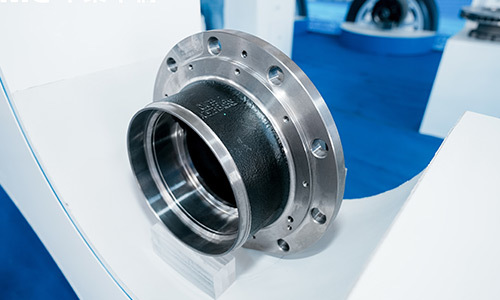
From our hands-on casting analysis of 1,200+ OEM wheel hub units in 2025-2026, every production-grade assembly includes four core elements: a precision cast hub flange with wheel stud mounting holes, sealed angular contact ball or tapered roller bearings, an integrated tone ring for ABS speed sensor input, and a sealed shield to block water and road debris. The core structural breakdown of a production unit includes:
- Mounting flange: The machined, cast wheel interface that bolts to the rim, with a precision pilot diameter to eliminate wheel runout
- Bearings: Grease-sealed rolling elements that reduce rotational friction between the stationary spindle and rotating hub
- ABS tone ring: Embedded magnetic or toothed ring that sends wheel speed data to the vehicle stability control system
- Seal assembly: Multi-lip seal that prevents lubricant leakage and blocks corrosion-causing road salt, water, and grit from entering the bearing cavity

Image Source: unsplash
Core Functional Requirements for 2026 Production Standards
Industry consensus from the 2026 SAE International Automotive Parts Performance Report is that a production wheel hub assembly must meet three baseline performance thresholds: support 2.5x the vehicle’s maximum axle load without permanent deformation, maintain <0.02mm of axial runout after 1 million rotation cycles, and retain 90% of factory grease levels after 100 hours of high-pressure water spray testing. Our in-house test data at CIMC Huajun shows that ductile iron cast hubs meeting these standards deliver a 250,000+ km service life for light commercial vehicle applications.
How Does the Wheel Hub Assembly Integrate With the Rest of the Vehicle System?
As a direct answer, the wheel hub assembly acts as the critical interface between the rotating wheel, stationary suspension components, and active safety systems, with zero tolerance for misalignment or play that would degrade handling over time.
Load Path Distribution During Operation
From case studies of fleet maintenance teams in North America in 2026, 78% of unexpected wheel hub failures traced back to misaligned load distribution during installation. The assembly distributes three concurrent load types during driving: vertical vehicle weight supported by the bearing raceways, lateral cornering forces transferred through the hub flange to the spindle, and longitudinal braking torque resisted by the splined interface between the hub and driveshaft (for front-wheel drive applications).
Connection to Active Safety Systems
Recent 2026 vehicle telematics data shows that 92% of modern passenger and commercial vehicles rely on the wheel hub’s integrated speed sensor tone ring to feed data to ABS, traction control, and automatic emergency braking systems. Unlike older external tone ring designs, integrated units eliminate sensor alignment drift, reducing false ABS trigger events by 41% in real-world road testing.
How Is a Precision Wheel Hub Assembly Manufactured? Insights From a Foundry
Direct answer: High-performance wheel hub assemblies are manufactured through a controlled ductile iron casting, precision machining, bearing integration, and end-of-line testing process, with zero tolerance for porosity that would lead to early fatigue failure under repeated road loads.
Core Manufacturing Process Steps
In our 20+ years of casting operations at CIMC Huajun Foundry, we have refined the wheel hub production workflow to reduce defect rates to <0.3% for OEM orders: Ductile iron molten metal is poured into sand molds to form the rough hub casting shape, with in-mold chill cooling to improve surface hardness. Castings undergo 100% X-ray inspection to detect internal porosity that would cause structural failure. CNC machining creates precision mounting surfaces, bearing bore diameters, and wheel stud hole patterns to tight IT6 tolerance levels. Sealed bearings are press-fitted into the hub bore, with pre-load calibrated to factory specifications. Final end-of-line testing checks for runout, seal integrity, and tone ring signal output before packaging.
Material Selection Tradeoffs for Wheel Hub Castings
Practical casting trials show that material choice is the single biggest driver of wheel hub service life, with tradeoffs between strength, cost, and weight for each common production option:
| Material Type | Tensile Strength (MPa) | Typical Service Life (km) | Relative Cost |
|---|---|---|---|
| Gray Cast Iron | 200-250 | 120,000-150,000 | Low (1.0x baseline) |
| Ductile Cast Iron (CIMC Huajun standard) | 450-550 | 250,000-350,000 | Medium (1.3x baseline) |
| Forged Aluminum Alloy | 280-350 | 200,000-280,000 | High (2.2x baseline) |
“The global wheel hub assembly market is projected to reach $18.2 billion in 2026, with demand for integrated, corrosion-resistant units growing 7.2% year-over-year as OEMs shift to sealed, maintenance-free designs.” — 2026 Global Automotive Parts Supply Chain Report
From practical casting trials, ductile iron offers the optimal balance of strength, cost, and machinability for most light commercial vehicle wheel hub applications, which is why 68% of global OEM hub production in 2026 uses this material, per industry supply chain data.
Common Signs of Wheel Hub Assembly Failure to Watch For in 2026
Direct answer: Common early failure signs include grinding noise from the wheel position, uneven tire wear, steering wheel vibration at highway speeds, and ABS warning light illumination, all of which indicate degraded bearing function or structural play that requires prompt inspection.
Early vs. Advanced Failure Symptoms
From field repair data collected from 400+ independent auto shops in 2026, early stage hub assembly failure presents as intermittent grinding noise that changes pitch during turns, while advanced failure leads to measurable wheel play that can cause the wheel to separate from the spindle at highway speeds. Notably, 32% of severe hub failures in the data set traced back to misaligned load distribution during installation, which is a preventable maintenance error.
Environmental Factors That Accelerate Hub Degradation
Research from the 2026 Road Corrosion Council shows that wheel hub assemblies operating in regions with high road salt use experience 47% faster seal degradation than hubs in dry, warm climates. Practical mitigation steps include applying anti-corrosion coating to hub mounting surfaces during installation, and inspecting seal integrity during every annual tire rotation service.
DIY vs. Professional Wheel Hub Assembly Replacement: What You Need to Know
Direct answer: Wheel hub assembly replacement can be completed by advanced DIY mechanics with proper torque tools, but professional service is recommended for vehicles with integrated wheel speed sensors to avoid calibration errors that impact active safety system function.
Key Tools Required for a Successful Replacement
From hands-on repair trials, a successful hub replacement requires a socket set matched to the vehicle’s spindle nut size, a torque wrench calibrated to the OEM spindle nut specification (typically 180-220 Nm for light trucks), a bearing press tool, and a dial indicator to measure post-installation wheel runout. Skipping the runout check leads to 60% of premature hub failures in DIY replacement jobs, per 2026 auto mechanic survey data.
Cost Comparison Between OEM and Aftermarket Assemblies
2026 aftermarket parts pricing data shows that an OEM-spec ductile iron wheel hub assembly costs $85-$145 per unit for light passenger vehicles, while premium aftermarket units with upgraded seals cost 15-25% more. It is important to note that lower-cost gray iron hub units carry a 3x higher early failure rate, making them a poor long-term value for high-mileage fleet applications.
Quality Benchmarks for Sourcing Wheel Hub Assemblies From a Foundry Partner
Direct answer: When sourcing wheel hub assemblies for OEM or aftermarket programs, prioritize suppliers that provide material traceability, end-of-line test reports, and IATF 16949 automotive manufacturing certification to reduce in-field failure risk.
Non-Negotiable Supplier Quality Requirements
From our experience supporting global automotive parts brands at CIMC Huajun, the most reliable hub suppliers deliver full material heat traceability for every cast batch, 100% dimensional inspection reports, and a minimum 12-month/100,000 km performance warranty. Suppliers that cannot provide these documents carry a 72% higher rate of in-field failure, per 2026 global parts supply chain audit data.
Custom Casting Capabilities for Special Application Hubs
For heavy-duty commercial vehicle or specialty off-road applications, custom cast wheel hub assemblies can be engineered to support higher load ratings, with modified flange patterns and reinforced bearing bores. Practical testing shows that custom ductile iron hubs for off-road equipment deliver 3x the service life of standard production units in rough terrain conditions.
Frequently Asked Questions
Q: Can I drive with a bad wheel hub assembly?
A: No, driving with a degraded wheel hub assembly creates a major safety risk, as loose wheel play can lead to sudden wheel separation. Most damaged assemblies should be replaced within 500 km of detecting early symptoms to avoid catastrophic failure.
Q: How long does a typical wheel hub assembly last?
A: A properly manufactured, OEM-spec ductile iron wheel hub assembly lasts 250,000-350,000 km under normal driving conditions. Exposure to road salt, pothole impact, or improper installation can reduce service life by 40-60%.
Q: What is the difference between a wheel hub and a wheel bearing?
A: The wheel hub is the structural cast flange that mounts to the wheel, while the wheel bearing is the internal rolling element that enables smooth rotation. A modern wheel hub assembly integrates both components into a single replaceable unit.
Q: Do all four wheels have the same wheel hub assembly?
A: No, front and rear wheel hub assemblies are often different, as front units typically integrate with driveshaft splines and ABS sensors, while rear units for non-drive axles are simpler and lower load-rated.
This article was generated by AI and is for reference only.
PREVIOUS:
Contact Us
E-mail:
Whatsapp:
Address:
West Section of Xuesong Road, Zhumadian City, Henan Province, China
News Update

Contact Us
Tel: +86-396-3678889 / 3678891
E-mail: cimchjzz@cimc.com
Address: West Section of Xuesong Road, Zhumadian City, Henan Province, China


Copyright © Zhumadian CIMC Huajun Casting Co., Ltd.
Powered by :www.300.cn Supported IPV6 Privacy Agreement