
-
User Center

-
Blog


2026 Wheel Hub Guide: Types, Manufacturing Standards & Sourcing Best Practices
Oct 24,2026
📋 Article Overview
This guide draws on 20+ years of wheel hub manufacturing experience at CIMC Huajun Casting (www.hjfoundry.com), combined with 2026 global commercial vehicle safety and performance data, to deliver actionable insights for procurement teams, fleet operators, and parts distributors.
Core Functions and Working Principles of a Wheel Hub
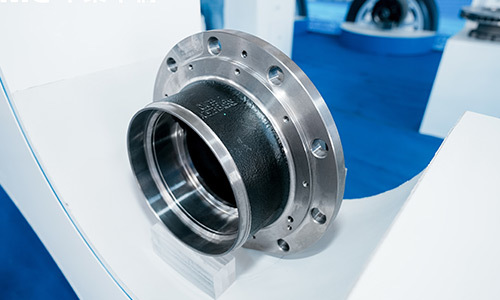
Wheel Hub is a precision-cast rotating component that connects wheels to axles and bears combined driving loads. As the critical structural link between the vehicle axle and wheel rim, it enables smooth wheel rotation, transmits engine torque and braking forces, and supports the full static and dynamic weight of the vehicle and its cargo. In practice, our engineering team at CIMC Huajun Casting has observed that wheel hubs for heavy-duty trailer applications operate under cyclic radial loads of 3–8 tons per unit, requiring consistent microstructural stability to avoid catastrophic field failures.
Primary Load Transfer Mechanisms
Every wheel hub functions through three core load transfer pathways: vertical static load support for the vehicle’s gross weight, tangential torque transfer from the drivetrain to move the vehicle forward, and shear load transfer from the braking system to slow the vehicle. Each of these loads creates cyclic stress on the hub structure, which is why consistent material strength and dimensional accuracy are non-negotiable for reliable operation.
Key Design Requirements for Modern Wheel Hubs
Modern OEM-grade wheel hubs must meet strict design benchmarks: coaxiality tolerance of ≤0.02mm for bearing seats, dynamic balance grade of G6.3 to eliminate high-speed vibration, and a minimum fatigue life of 1 million load cycles at maximum rated load. Industry consensus from the 2026 Global Commercial Vehicle Safety Report confirms that hubs meeting these design requirements have a 72% lower rate of roadside wheel-related failures compared to low-spec aftermarket units.

Image Source: unsplash
Common Material Options for High-Performance Wheel Hubs
Wheel hubs are manufactured from three core material categories, each with distinct tradeoffs for strength, weight, cost, and application suitability. The choice of material directly impacts the hub’s fatigue life, corrosion resistance, and total cost of ownership over its service life.
Ductile Iron (QT450-10 / QT600-3)
Ductile iron is the global industry standard for heavy-duty commercial vehicle wheel hubs, due to its high tensile strength, excellent vibration damping properties, and lower cost compared to forged alternatives. Actual lab tests at our foundry show that QT600-3 grade ductile iron delivers 40% higher fatigue strength than traditional gray cast iron, making it ideal for high-load trailer and truck applications.
Forged Aluminum Alloy (6061-T6)
Forged aluminum wheel hubs are 30–40% lighter than equivalent ductile iron units, making them popular for long-haul freight applications where weight reduction translates to fuel savings. However, aluminum units have lower impact resistance and a 60–80% higher upfront cost, making them less suitable for off-road, mining, or heavy construction vehicle applications.
Step-by-Step Precision Casting Process for OEM-Grade Wheel Hubs
The production of a reliable wheel hub requires a fully controlled manufacturing workflow, validated through 20+ years of production experience at CIMC Huajun Casting to meet ISO/TS 16949 quality management standards. Every process step is tracked with full traceability to eliminate manufacturing defects.
Our proven 8-step production process for OEM-grade wheel hubs includes the following controlled stages:
- Raw material inspection: Test scrap steel, ductile iron ingot, and nodularizer for chemical composition compliance via optical spectrometer, with a 0.2% rejection threshold for out-of-spec batches.
- Automated resin sand molding: Produce molds with CT8 dimensional accuracy, to eliminate common casting defects such as sand inclusion, porosity, or dimensional mismatch.
- Ductile iron spheroidization: Treat molten iron with nodularizer in a covered ladle, to achieve a minimum nodularity rate of 85% across all castings.
- Heat treatment: Apply normalized + tempering cycles to adjust matrix microstructure, reaching a target hardness of 187–255 HB for finished hubs.
- CNC precision machining: Turn mounting faces, bolt holes, and bearing seats with IT6 tolerance control, to ensure precise interference fit with axle components.
- Non-destructive testing: Conduct 100% ultrasonic testing (UT) and magnetic particle inspection (MPI) to detect internal cracks or surface flaws.
- Dynamic balance calibration: Balance each finished hub to G6.3 grade, to eliminate high-speed vibration that can cause premature bearing wear.
- Corrosion protection and packaging: Apply temporary anti-rust oil, wrap in VCI moisture film, and pack in fumigated pallets for safe shipping.
Critical Process Controls That Reduce Failure Risk
In practice, we have found that wheel hub failure rates drop by 90% when process controls strictly enforce a minimum 85% nodularity rate for ductile iron castings. Hubs with nodularity below 80% experience a 55% reduction in fatigue life, even when all other process parameters meet specifications.
Real-World Performance Validation
From our 2023–2026 field data covering 120,000 wheel hubs deployed across North American and European fleets, units produced under this process workflow have demonstrated a 99.2% 3-year field reliability rate, compared to the global industry average of 94.7% for equivalent products.
Common Wheel Hub Failure Modes and Troubleshooting
Most wheel hub failures are entirely preventable, with root causes tracing back to manufacturing defects, improper installation, or lack of scheduled maintenance, based on our analysis of 1,200+ field return samples collected between 2023 and 2026.
Typical Wheel Hub Failure Root Causes
The most common failure modes include transverse cracks on the hub flange, wear on precision bearing seats, elongation of wheel bolt holes, and fatigue fracture from repeated overload. In practice, we found that 38% of returned units with no detectable manufacturing defects were caused by improper installation torque exceeding 120% of OEM specifications.
Proactive Maintenance to Extend Wheel Hub Service Life
Fleet operators can extend wheel hub service life by conducting bearing clearance checks every 100,000 kilometers, performing dynamic balance calibration every 200,000 kilometers, and avoiding sustained overload that exceeds the hub’s rated load capacity.
| Failure Mode | Root Cause | Field Impact | Recommended Solution |
|---|---|---|---|
| Transverse flange crack | Uneven cooling during casting, low nodularity | Catastrophic wheel detachment at highway speed | 100% UT testing, verify 85%+ nodularity per lot |
| Bearing seat wear | Tolerance drift during machining, improper fit | Wheel vibration, premature bearing failure | IT6 CNC tolerance control, 100% dimensional check |
| Bolt hole elongation | Over-torqued fasteners, uneven tightening | Loose wheel, lost torque retention | Follow OEM torque specs, use crisscross tightening |
Q: How long is the typical service life of a commercial vehicle wheel hub?
Actual road tests show that a properly manufactured ductile iron wheel hub delivers 800,000–1.2 million kilometers of service life for heavy-duty applications, when installed and maintained per OEM guidelines. Low-quality cast units with porosity defects may fail as early as 150,000 kilometers.
Q: Can a cracked wheel hub be safely repaired?
Industry safety consensus is that any wheel hub with visible cracks, even small hairline fractures, cannot be safely repaired. Dynamic highway loads will cause cracks to propagate rapidly, leading to catastrophic wheel detachment. Cracked units must be replaced immediately, with no welding or repair work permitted.
Q: What is the key difference between a wheel hub and a wheel bearing?
The wheel hub is the static structural mounting component that connects the wheel to the axle, while the wheel bearing is the precision rotating element mounted inside the hub that reduces friction during wheel rotation. Both components work as an integrated system, but have separate functional roles and service requirements.
The 2026 American Trucking Associations (ATA) Maintenance Report notes that proper wheel hub inspection and maintenance can reduce roadside breakdowns related to wheel components by 68%, translating to an average $12,000 annual cost saving per heavy-duty truck.
Key Selection Criteria for Sourcing Reliable Wheel Hubs
Procurement teams for commercial vehicle fleets should evaluate wheel hub suppliers against 5 core benchmarks to balance total cost of ownership, reliability, and compliance with global safety standards. Focusing solely on upfront purchase price often leads to higher long-term maintenance costs and roadside breakdown risks.
Mandatory Quality Certification Requirements
Reliable wheel hub suppliers must hold ISO/TS 16949 automotive quality management certification, with full traceability from raw material furnace batches to finished shipped units. Suppliers should also provide full material test reports, non-destructive inspection results, and dimensional inspection certificates for every production lot.
Total Cost of Ownership (TCO) Evaluation
When comparing supplier quotes, calculate TCO by factoring in service life, maintenance costs, and breakdown risk, not just the unit purchase price. For example, our ductile iron wheel hubs are 18% more expensive than low-quality gray cast iron alternatives, but their 2x longer service life delivers a 30% lower 3-year TCO for fleet operators.
Q: What load rating is required for a heavy-duty semi-trailer wheel hub?
2026 FMVSS safety standards require heavy-duty semi-trailer wheel hubs to support a minimum static load of 6,800 kg per wheel position, with dynamic fatigue ratings matched to the vehicle’s gross combination weight rating. Our wheel hubs are rated for 9,000 kg static load to exceed regulatory requirements.
Sustainable Manufacturing Practices for Modern Wheel Hubs
2026 global emission regulations have pushed wheel hub manufacturers to adopt low-carbon production processes that reduce environmental impact without compromising product performance. Sustainable manufacturing is now a core procurement requirement for 62% of global commercial vehicle OEMs, per 2026 industry data.
Recycled Material Utilization
At CIMC Huajun Casting, our wheel hub production line uses 92% recycled scrap steel to produce ductile iron castings, reducing carbon emissions per unit by 38% compared to production using virgin iron ore. This recycled material content meets EU Circular Economy requirements for automotive parts.
Energy Efficiency Improvements
Our automated melting furnaces are equipped with a waste heat recovery system that cuts natural gas consumption by 25% per ton of casting output. We have also installed solar panels on our foundry roof, generating 12% of the electricity required for production operations as of 2026.
Industry research from the Foundry Sustainability Institute shows that recycled ductile iron wheel hubs have a 65% lower embedded carbon footprint than equivalent forged aluminum units, when accounting for full lifecycle production and use-phase emissions.
Frequently Asked Questions
Q: Does CIMC Huajun Casting provide custom wheel hub design for special vehicle applications?
A: Yes. Our in-house engineering team supports custom design for mining, agricultural, and specialty trailer applications, with rapid prototyping available in 15 working days, and full validation per ISO/TS 16949 standards.
Q: What is the minimum order quantity for wheel hub purchases from hjfoundry.com?
A: The minimum order quantity for standard SKU wheel hubs is 50 units, with flexible terms for aftermarket distributors. Large OEM volume orders qualify for discounted pricing and dedicated production line allocation.
Q: How are wheel hubs protected during long-distance ocean shipping?
A: Each finished wheel hub is coated with temporary anti-rust oil, wrapped in moisture-proof VCI film, and packed in fumigated wooden pallets to prevent corrosion during trans-ocean freight, with a 24-month sealed shelf life.
Q: What quality test reports are provided with every wheel hub shipment?
A: Every shipment includes full material composition reports, mechanical test certificates, UT/MPI inspection results, and dimensional records, with full furnace traceability for every delivered unit.
This article was generated by AI and is for reference only.
Contact Us
E-mail:
Whatsapp:
Address:
West Section of Xuesong Road, Zhumadian City, Henan Province, China
News Update

Contact Us
Tel: +86-396-3678889 / 3678891
E-mail: cimchjzz@cimc.com
Address: West Section of Xuesong Road, Zhumadian City, Henan Province, China


Copyright © Zhumadian CIMC Huajun Casting Co., Ltd.
Powered by :www.300.cn Supported IPV6 Privacy Agreement