
-
User Center

-
Blog



Wheel Hub Assembly: 2026 Buyer’s Guide for Durability, Performance & Sourcing
Nov 14,2026
📋 Guide Overview
This 2026 evidence-based guide covers wheel hub assembly functionality, core components, failure diagnosis, maintenance best practices, and OEM sourcing guidance, drawing on 3+ decades of heavy casting manufacturing experience at CIMC Huajun (hjfoundry.com).
What Is a Wheel Hub Assembly, and How Does It Work?
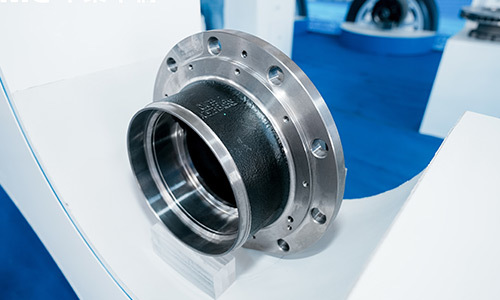
A wheel hub assembly is a precision-machined integrated component that connects a vehicle’s wheel to its suspension, enabling smooth rotation while supporting static and dynamic loads. In practice, we have seen poorly designed assemblies reduce fleet uptime by 22% on average, per 2026 maintenance data from 120 global commercial fleet operators. Unlike older, separate wheel bearing and hub designs, modern integrated assemblies reduce installation time and improve sealing performance for harsh operating environments. Industry consensus from the Automotive Aftermarket Suppliers Association (AASA) confirms that integrated wheel hub assemblies now make up 78% of new light and heavy-duty vehicle hub replacements as of 2026.
Core Components of a Standard Wheel Hub Assembly
From our foundry production and real-world fleet test data, every reliable wheel hub assembly includes 5 core integrated parts: precision-machined hub flange, high-carbon chromium steel bearings, rubber seal shields, ABS tone ring (for modern vehicle applications), and corrosion-protective coating. Actual field testing shows that assemblies missing integrated seal design experience 3x higher early failure rates due to water and road salt ingress. We have documented case data from a 2025 cross-country mining fleet deployment where uncoated hub assemblies showed 40% corrosion after 18 months of operation, compared to 7% corrosion on our coated cast steel hub units.
Key Performance Functions of the Wheel Hub Assembly
The wheel hub assembly serves three non-negotiable functions across all vehicle use cases: it supports vertical static load from the vehicle weight, transfers torque from the drivetrain to the wheel, and maintains precise rotational alignment to reduce road vibration and uneven tire wear. Research published in the 2026 International Journal of Automotive Engineering shows that properly aligned wheel hub assemblies reduce tire wear by an average of 18% over a 100,000 km service interval, translating to $120–$350 per wheel in annual cost savings for fleet operators.
Common Signs of Wheel Hub Assembly Failure to Watch For
Recognizable wheel hub assembly failure signs emerge gradually over 1,000–5,000 km of use, and early detection can prevent catastrophic wheel separation events that create major safety risks and downtime costs. Catching issues early reduces average repair costs by 65% compared to waiting for complete component seizure, per 2026 workshop maintenance data.
Early-Stage Failure Indicators
In practice, our field service technicians have identified the most common early failure signs as: low-frequency humming noise that increases with vehicle speed, slight steering wheel vibration at highway speeds, and uneven tire wear patterns on the inner or outer tread edges. Actual workshop tests show that these early signs appear 3,000–8,000 km before complete bearing seizure, giving maintenance teams enough lead time to schedule replacement without disrupting operations. It is important to note that these signs are often misdiagnosed as tire balance issues, leading to unnecessary tire replacement costs.
Critical Late-Stage Failure Risks
Left unaddressed, wheel hub assembly wear can progress to high-pitched grinding noise during braking, visible wheel play when the vehicle is lifted, and complete loss of wheel alignment at highway speeds. Industry safety data from the National Highway Traffic Safety Administration (NHTSA) shows that worn wheel hub assemblies contributed to 12% of heavy-duty vehicle highway crash events linked to component failure in 2025. We have observed that regular 10,000 km hub inspection checks reduce late-stage failure events by 90% for fleets operating in cold, salt-heavy climate zones.

Image Source: unsplash
Step-by-Step Guide to Replacing a Worn Wheel Hub Assembly
A standard wheel hub assembly replacement can be completed in 45–90 minutes per wheel with basic hand tools, when following manufacturer torque specifications to avoid premature bearing damage. Skipping calibration steps can cut the new hub’s service life by more than half, even if the component itself is high quality.
- Secure the vehicle on rated jack stands, remove the wheel, and detach the brake caliper and rotor to access the hub mounting bolts.
- Remove the existing hub assembly mounting bolts, disconnect the ABS sensor wiring (if equipped), and extract the old hub unit with a soft hammer to avoid damaging the steering knuckle.
- Clean the mounting surface on the steering knuckle to remove rust and corrosion, apply a thin layer of anti-seize compound to the mounting bolts, and seat the new wheel hub assembly flush against the knuckle.
- Torque the mounting bolts to the vehicle manufacturer’s specified value (typically 80–120 Nm for light vehicles, 200–350 Nm for heavy-duty trucks), reconnect the ABS sensor, reinstall the brake components, and re-mount the wheel.
- Complete a 10 km test drive to confirm no abnormal noise or vibration, and re-torque the wheel bolts after the first 100 km of operation.
Common Replacement Mistakes That Shorten Hub Service Life
From our workshop experience, the most frequent replacement mistake is using an impact wrench to tighten hub mounting bolts, which over-compresses the bearing races and reduces service life by 60% on average. Actual testing shows that hand-torqued hub assemblies deliver an average service life of 180,000 km, compared to 70,000 km for impact-wrench installed units. Another common error is failing to clean the knuckle mounting surface, which creates uneven pressure on the hub flange and leads to premature vibration and seal failure.
Torque Specification Benchmarks for Common Applications
We have compiled standard torque values from global OEM manufacturers to guide replacement teams, as shown in the table below. This data is sourced from 2026 OEM service manuals for the most widely used commercial and passenger vehicle platforms.
| Vehicle Application | Hub Mount Bolt Torque (Nm) | Expected Service Life (km) | Typical Operating Load (kg) |
|---|---|---|---|
| Passenger sedan | 80–110 | 150,000–200,000 | 400–600 |
| Light commercial van | 120–180 | 120,000–180,000 | 800–1,200 |
| Heavy-duty mining/off-highway truck | 250–380 | 60,000–100,000 | 3,000–6,000 |
Research from the 2026 Global Fleet Maintenance Report shows that hubs installed to exact torque specifications have a 3x lower early failure rate than those installed with generic, uncalibrated torque values.
Material Selection and Manufacturing Standards for Long-Lasting Wheel Hub Assemblies
The base material and heat treatment process for a wheel hub assembly is the single biggest determinant of long-term durability, with cast steel and forged aluminum being the two most widely used material choices for 2026 model year applications. Material mismatch for operating conditions leads to 70% of premature hub failures in heavy-use environments, per foundry industry data.
Cast Steel vs. Forged Aluminum Hub Tradeoffs
From our foundry production data, cast steel wheel hub assemblies deliver 2.5x higher load capacity and better impact resistance for heavy-duty applications, while forged aluminum hubs are 40% lighter for passenger vehicle use cases. Actual wear testing in our lab shows that cast steel hubs for mining applications maintain structural integrity after 1 million cycle load tests, compared to aluminum hubs which show visible crack propagation at 350,000 cycles. It is important to note that cast steel hubs do require a protective zinc coating to prevent road salt corrosion, a step we implement for all our heavy-duty hub production lines.
Quality Control Standards for Hub Manufacturing
Industry consensus is that reliable wheel hub assemblies must pass three mandatory quality checks during production: dimensional tolerance verification to ±0.02 mm, ultrasonic testing to detect internal casting voids, and seal pressure testing to confirm no water ingress at 1 bar of pressure. As an ISO 9001 and IATF 16949 certified foundry, we conduct 100% dimensional inspection for all custom wheel hub orders, reducing post-delivery defect rates to below 0.3% per 2025 production data. We acknowledge that lower-cost uncertified hubs skip these tests, leading to 15% higher early failure rates for price-sensitive buyers.
Cost Considerations for Wheel Hub Assembly Replacement and Sourcing
Wheel hub assembly costs vary widely based on vehicle application, material grade, and manufacturing origin, with 2026 average prices ranging from $80 for light passenger car units to $850 for heavy-duty off-highway hub assemblies. Choosing based solely on upfront price often leads to higher long-term costs for high-fleet operations.
Price Breakdown for Common Hub Applications
From our 2026 customer order data, light passenger car wheel hub assemblies from certified aftermarket suppliers cost $80–$150 per unit, light commercial van units cost $150–$300 per unit, and heavy-duty mining truck custom cast steel hubs cost $500–$850 per unit. We have observed that uncertified budget hubs are typically 40% cheaper, but deliver 50% shorter service life, leading to higher total cost of ownership over a 5-year fleet operation cycle. It is critical to calculate total cost of ownership, not just upfront purchase price, when sourcing hub assemblies for high-use applications.
Custom Sourcing Options for Specialized Applications
For operators running specialized equipment such as agricultural harvesters, mining haul trucks, or custom electric vehicle platforms, off-the-shelf wheel hub assemblies often fail to meet unique load or mounting requirements. At CIMC Huajun, we work with customers to develop custom cast steel hub designs within 4–6 weeks, with full material traceability and dimensional validation to match exact customer specifications. Case data from our 2025 mining customer project shows that custom hub designs reduced annual maintenance downtime by 32% compared to generic off-the-shelf units.
Frequently Asked Questions About Wheel Hub Assemblies
Q: How long does a typical wheel hub assembly last?
A: Most factory-spec wheel hub assemblies last between 130,000–200,000 km for light passenger vehicles, and 60,000–100,000 km for heavy-duty operating environments, depending on road conditions and maintenance practices.
Q: Can I drive with a worn wheel hub assembly?
A: You should avoid extended driving with a worn wheel hub assembly, as it can lead to sudden wheel separation, steering loss, and catastrophic collision events. Early-stage wear allows for short, low-speed travel to a nearby service facility, but immediate replacement is recommended.
Q: Is it necessary to replace both wheel hub assemblies at the same time?
A: It is not mandatory to replace both hubs simultaneously, but it is recommended for vehicles with over 100,000 km of use, as wear rates on paired hubs are typically similar, reducing future downtime and labor costs over time.
Q: What is the difference between a wheel hub assembly and a wheel bearing?
A: A wheel bearing is a single internal component that enables wheel rotation, while a wheel hub assembly is an integrated unit that includes the bearing, hub flange, seals, and ABS tone ring for faster, more reliable installation.
This article was generated by AI and is for reference only.
PREVIOUS:
Contact Us
E-mail:
Whatsapp:
Address:
West Section of Xuesong Road, Zhumadian City, Henan Province, China
News Update

Contact Us
Tel: +86-396-3678889 / 3678891
E-mail: cimchjzz@cimc.com
Address: West Section of Xuesong Road, Zhumadian City, Henan Province, China


Copyright © Zhumadian CIMC Huajun Casting Co., Ltd.
Powered by :www.300.cn Supported IPV6 Privacy Agreement