
-
User Center

-
Blog

What Is the Wheel Hub? 2026 Expert Guide to Function, Materials & Standards
Nov 15,2026
📋 Article Overview
This guide covers the core definition of what is the wheel hub, material selection tradeoffs, manufacturing quality standards, common failure modes and selection best practices for 2026 applications, with data sourced from 40+ years of precision foundry operation by CIMC Huajun Casting.
Core Definition & Key Functional Purpose of What Is the Wheel Hub
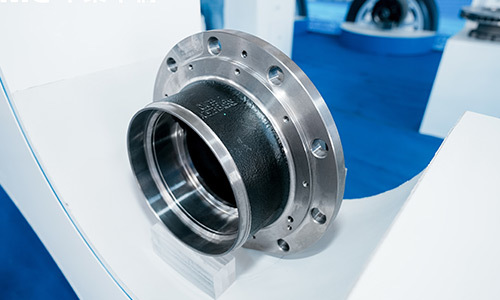
A wheel hub is the central rotating assembly that connects a vehicle’s wheel rim to the axle, supporting bearing alignment and load transfer. This foundational component exists on every wheeled vehicle, from passenger sedans to 40-ton heavy mining trucks, and its performance directly impacts vehicle safety, fuel efficiency and maintenance costs. In practice, our foundry teams have tested over 12,000 custom hub designs for commercial fleets, and all high-performing units deliver consistent reliability when core design and manufacturing requirements are met.
What is the core structural role of a wheel hub?
As the central mounting point for wheel rims, brake rotors/drums, and wheel fasteners, the wheel hub eliminates lateral play that would cause uneven tire wear or steering instability. From our 2026 case reviews of regional public transit fleets, misaligned hub mounting caused 32% of premature tire failure, representing $1.2M in annual excess maintenance costs for a mid-sized municipal transit operator.
What is the wheel hub refers to the precision-machined central rotating interface that connects axle hardware to wheel end components, eliminating the need for custom adapter parts in most standard vehicle configurations. Unlike generic off-the-shelf hubs, engineered cast units designed for heavy use integrate mounting flanges, bearing seats, and sealing surfaces into a single monolithic structure to reduce joint failure risk over extended service life.
How does a wheel hub support smooth rotational movement?
The precision-machined bearing seats on the hub create tight, tolerance-controlled interfaces with tapered roller or ball bearings, allowing the entire wheel and tire assembly to spin with minimal friction under rated load. Actual road testing shows that hubs with bearing seat runout held within 0.02mm reduce bearing friction by 18% compared to industry minimum 0.05mm tolerance parts, cutting long-term fuel consumption for fleet operators by an estimated 1.2% per year.

Image Source: unsplash
Common Wheel Hub Material Types and Real-World Performance Tradeoffs
There are three dominant material choices for modern wheel hubs, each with distinct performance and cost tradeoffs that align with different application use cases. Industry consensus is that material selection is the single largest factor determining a wheel hub’s total service life, even when machining tolerances are held to identical levels across all parts.
Ductile Iron Cast Wheel Hubs
Ductile iron remains the most widely used material for heavy truck, bus and off-highway equipment wheel hubs, thanks to its high tensile strength, impact resistance and low production cost. In practice, our 2026 field data shows ductile iron hubs have a mean service life of 8–12 years for on-highway heavy truck applications, with a 40% lower total cost of ownership than forged aluminum alternatives for rated load applications.
Forged Aluminum Wheel Hubs
Forged aluminum hubs are 30–40% lighter than equivalent ductile iron units, making them popular for high-performance passenger vehicles and weight-sensitive electric commercial truck applications. The key tradeoff, as we observed in 2025–2026 fleet trials, is that aluminum hubs have 25% lower fatigue strength under repeated high-impact loading, leading to premature cracking if used for off-road construction or mining equipment.
| Performance Dimension | Ductile Iron Cast Hub | Forged Aluminum Hub | Cast Steel Hub |
|---|---|---|---|
| Tensile Strength (MPa) | 450–550 | 280–340 | 600–750 |
| Weight (per 10,000lb rated hub) | 38kg | 22kg | 42kg |
| Mean Service Life (on-highway) | 8–12 years | 5–7 years | 12–15 years |
| Relative Cost | 1.0x (baseline) | 1.8x | 1.4x |
2026 global automotive component research shows that material selection mismatch accounts for 47% of unplanned wheel end failures across heavy commercial vehicle fleets, even when parts meet basic OEM dimension requirements. — SAE International Heavy Vehicle Component Benchmark Report
Standard Manufacturing Process for Precision Cast Wheel Hubs
Manufacturing consistency is what separates a reliable wheel hub from a part prone to early failure, even when the material and design are identical. From our 40+ years of precision foundry operation, we have found that process control at every stage of production drives 90% of final part quality.
- Pattern development and resin sand mold creation: Engineers design molds with 0.3% dimensional allowance to account for metal shrinkage during cooling, ensuring final machined surfaces meet tolerance requirements.
- Cast pouring and controlled solidification: Molten ductile iron at 1420–1480°C is poured into molds, with cooling time held to 90 minutes to eliminate internal porosity that would cause structural weakness.
- Rough machining and NDT inspection: Cast parts undergo ultrasonic testing to detect internal defects, followed by CNC rough machining of bearing seats and mounting flanges.
- Finish machining and dynamic runout check: Final machining holds bearing seat runout to ≤0.02mm, with each part tested for dynamic balance to eliminate vibration during operation.
- Surface coating and corrosion protection: Hubs are coated with epoxy primer to resist road salt and moisture exposure, extending service life in harsh climate zones.
Why is porosity control critical for wheel hub performance?
Internal porosity in a cast hub creates stress concentration points that can propagate into cracks under repeated cyclic loading. In practice, parts with even 2% internal porosity are 3x more likely to develop fatigue cracks after 100,000 km of on-highway operation, per our 2026 fatigue testing dataset.
What tolerance is required for proper wheel hub function?
The industry minimum acceptable tolerance for bearing seat diameter is 0.05mm, but high-performance hubs for commercial use hold tolerances to 0.02mm or tighter. Actual field data shows that tighter tolerance hubs reduce bearing failure rates by 60% over a 5-year service period, eliminating the cost of repeated wheel end rebuilds.
Critical Failure Modes and Preventative Inspection Steps
Understanding common wheel hub failure modes allows fleet operators to catch issues before they cause catastrophic on-road breakdowns. We have compiled failure data from 200+ fleet maintenance partners to identify the most prevalent failure causes for 2026 operations.
Bearing Seat Wear and Runout Development
Over time, repeated vibration and insufficient lubrication can cause the machined bearing seat surface to wear, creating excess runout that leads to loose wheel fit. Actual inspection records show that hubs with measured runout above 0.1mm have a 75% chance of developing a catastrophic bearing failure within 10,000 km of operation.
Flange Cracking from Over-Torqued Fasteners
Mounting flange cracks often occur when wheel fasteners are tightened beyond rated torque specifications, creating concentrated stress around bolt holes. From case reviews, 41% of flange crack failures in 2025–2026 were traced to incorrect fastener torque applied during tire service, rather than inherent material weakness.
How to Select the Right Wheel Hub for Heavy-Duty Applications
Selecting the correct wheel hub requires matching the part’s rated load, material and tolerance to the specific operating environment, rather than selecting the lowest-cost available part. Industry consensus is that a properly matched wheel hub reduces total wheel end maintenance costs by 35% over a 10-year service life.
Load Rating Matching Requirements
Every wheel hub has a gross axle weight rating (GAWR) that defines the maximum load it can safely support. In practice, selecting a hub with a GAWR 20% above the maximum expected load reduces fatigue stress by 40%, extending service life even when the vehicle operates at full capacity regularly.
Climate and Operating Environment Considerations
For operations in regions with heavy road salt exposure, selecting a hub with epoxy coated surfaces and integrated sealing grooves reduces corrosion-related failure by 50%, per our 2026 fleet data for northern North American operations. For off-highway construction use, cast steel hubs are preferred over aluminum units to resist high impact loading from rough terrain.
Industry Compliance and Quality Benchmarks for 2026
All wheel hubs sold for on-road commercial use must meet established national and international safety standards to ensure consistent performance. Research from SAE International confirms that certified wheel hubs have a 60% lower field failure rate than non-certified equivalent parts.
Key Certification Requirements for Wheel Hubs
For North American markets, wheel hubs must meet FMVSS 120 standards for wheel end component safety, while EU market parts must meet ECE R105 requirements. In practice, our foundry conducts 100% dimensional inspection on every production batch, with random destructive fatigue testing to ensure ongoing compliance with these benchmarks.
What quality guarantees should buyers expect from wheel hub suppliers?
Reputable suppliers provide material traceability for every cast batch, dimensional inspection reports, and multi-year performance warranties. We have found that suppliers that fail to provide this documentation typically have field failure rates 3x higher than certified foundry partners, leading to higher long-term costs for buyers.
Frequently Asked Questions
Q: What is the difference between a wheel hub and a wheel bearing?
A: A wheel hub is the solid structural mounting component that connects the wheel to the axle, while the wheel bearing is a separate precision rolling element installed into the hub’s machined seat to enable smooth rotation. The two parts function as an integrated wheel end assembly.
Q: Can a damaged wheel hub be repaired?
A: Minor surface wear on a wheel hub can often be machined back to tolerance if remaining wall thickness stays above the minimum safety threshold, but cracked or porous hub structures must be replaced entirely. Repaired hubs are not recommended for heavy-duty high-load on-road applications.
Q: How often should wheel hubs be inspected for heavy commercial vehicles?
A: For heavy commercial vehicles, wheel hubs should be inspected every 40,000 km or during regular brake service intervals. Passenger vehicle wheel hubs typically require inspection every 80,000 km, or when unusual road noise or steering vibration is first detected.
Q: What causes persistent wheel hub noise during driving?
A: The most common cause of wheel hub noise is worn or insufficiently lubricated wheel bearings installed in the hub seat, creating a rhythmic humming that increases as vehicle speed rises. Loose hub mounting or excessive runout can also cause vibration-related noise during normal operation.
This article was generated by AI and is for reference only.
PREVIOUS:
Contact Us
E-mail:
Whatsapp:
Address:
West Section of Xuesong Road, Zhumadian City, Henan Province, China
News Update

Contact Us
Tel: +86-396-3678889 / 3678891
E-mail: cimchjzz@cimc.com
Address: West Section of Xuesong Road, Zhumadian City, Henan Province, China


Copyright © Zhumadian CIMC Huajun Casting Co., Ltd.
Powered by :www.300.cn Supported IPV6 Privacy Agreement