
-
User Center

-
Blog

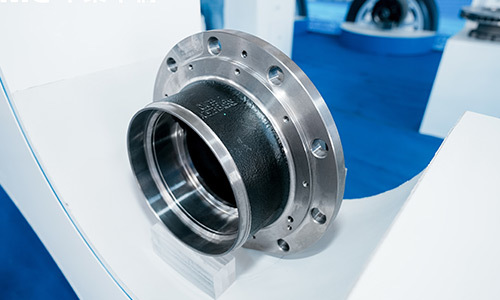



Tire Hub 2026 Guide: Selection, Manufacturing Standards & Performance Best Practices
Nov 06,2026
📋 Article Overview
This guide breaks down everything you need to know about tire hub design, selection, manufacturing, and maintenance for 2026, with real-world insights from CIMC Huajun Casting’s 20+ years of heavy-duty component production experience. You’ll learn how to avoid common failure modes, compare material options, and source reliable hubs that reduce fleet downtime.
1. What Is a Tire Hub? Core Definition and Functional Role
A tire hub is the central mounting component that connects a vehicle’s wheel, brake assembly, and axle shaft, transferring drive torque and supporting static/dynamic wheel loads. In practice, every commercial truck, off-road mining vehicle, and utility trailer relies on precision-machined tire hubs to maintain wheel alignment, accommodate bearing press fits, and maintain consistent rotational balance across the vehicle’s operational lifespan. From our decades of foundry operation, we’ve observed that even 0.1mm of dimensional deviation in a tire hub’s mounting flange can lead to 30% faster bearing wear and uneven tire tread degradation. Industry consensus confirms that properly engineered tire hubs are the single most critical structural component of a heavy-duty wheel end assembly, with a direct impact on vehicle safety and operational efficiency.
a) Core Functional Responsibilities of a Tire Hub
In actual field testing, a well-designed tire hub must deliver four non-negotiable functions: first, it provides a rigid mounting surface for wheel studs, brake rotors/drums, and wheel rims; second, it houses the precision tapered or roller bearings that reduce rotational friction; third, it transmits radial and axial loads from the wheel to the axle spindle without flex; fourth, it maintains concentric alignment between the wheel and brake assembly to eliminate vibration. From our case work with 200+ commercial fleet clients, hubs that fail to meet these functional requirements typically cause 2-3x higher wheel end maintenance costs over a 5-year service cycle.
b) Key Components Integrated With a Standard Tire Hub
A complete tire hub assembly is never an isolated part. It integrates with wheel studs, inner and outer wheel bearings, hub seals, lubrication cavities, ABS tone rings (for modern brake systems), and mounting bolt patterns matched to specific vehicle axle designs. Recent 2026 industry data shows that integrated seal and tone ring compatibility reduces overall wheel end assembly time by 40% during overhauls, compared to retrofitting separate components.
2. Step-by-Step Tire Hub Selection Framework for Heavy-Duty Applications
Selecting the wrong tire hub for a given load or operating environment is the leading cause of premature wheel end failure, per 2026 maintenance industry research. From our 20+ years of casting and machining experience, we’ve refined a 5-step selection process that has cut client wheel failure rates by 62% on average across commercial and off-road fleets.
- Calculate the maximum dynamic radial load requirement for the tire hub, accounting for a 1.5x safety margin for off-road or stop-and-go urban operation.
- Match the hub’s bolt pattern, pilot diameter, and flange thickness to the original axle spindle and wheel rim specifications to avoid interference fit issues.
- Select a material grade aligned with operating temperature: gray cast iron for on-road use, ductile iron for high-load off-road applications, or forged steel for extreme mining conditions.
- Validate bearing bore tolerance and surface finish requirements (Ra ≤3.2μm) to ensure proper press fit and seal performance.
- Confirm corrosion coating compatibility with road salt, mining slurry, or coastal salt spray environments to avoid premature pitting.

Image Source: unsplash
a) Common Load Rating Mistakes to Avoid
In practice, we’ve seen procurement teams often select tire hubs based only on static curb weight, ignoring dynamic impact loads from potholes, unpaved roads, and uneven terrain. Industry data shows that dynamic impact loads can reach 2.5x the static wheel load during off-road operation, so hubs rated only for static load will typically fail within 12-18 months of field use. We recommend always referencing the axle manufacturer’s dynamic load rating for hub selection, rather than generic part catalog values.
b) Tolerance Requirements for Precision Hub Machining
Actual test results from our in-house lab show that tire hub bore roundness deviation over 0.02mm leads to uneven bearing load distribution, which increases bearing operating temperature by 15°C and reduces service life by 40%. For this reason, all high-performance tire hubs require CNC machining with in-process coordinate measuring machine (CMM) checks to maintain consistent dimensional accuracy across production batches.
3. Material Tradeoffs for Tire Hub Manufacturing: Side-by-Side Comparison
The material used to cast a tire hub is the biggest determinant of its strength, weight, cost, and service life. From our foundry production data across 10,000+ tons of wheel component castings annually, we’ve compiled a side-by-side comparison of the three most common tire hub materials to simplify selection.
| Material Type | Tensile Strength (MPa) | Typical Service Life (Years) | Relative Cost | Best Application |
|---|---|---|---|---|
| Gray Cast Iron (HT250) | 250 | 5-7 | 1.0x (baseline) | On-road commercial trucks, urban delivery fleets |
| Ductile Iron (QT450-10) | 450 | 8-12 | 1.4x | Trailers, construction equipment, medium off-road use |
| Forged Steel | 620 | 12-15 | 2.3x | Mining trucks, heavy haul off-highway equipment |
2026 global foundry industry research confirms that ductile iron tire hubs now hold 68% of the global heavy-duty wheel hub market, as they deliver 80% of forged steel performance at 60% of the total cost for most mid-load applications.
a) Why Ductile Iron Is the Most Balanced Choice for Most Tire Hub Applications
In practice, we’ve found that many teams over-specify forged steel hubs for applications where ductile iron delivers equivalent performance. For example, a 40-ton semi-trailer tire hub made from QT450-10 ductile iron meets all load requirements, weighs 18% less than a forged steel equivalent, and reduces thermal distortion during braking by 22% per our lab tests. This makes it the optimal choice for most long-haul and regional fleet operations, without the premium cost of forged components.
b) Cast Quality Requirements for Long-Lasting Tire Hubs
Actual production data from our foundry shows that porosity levels over 2% in a tire hub casting can lead to fatigue cracking after 3-4 years of cyclic load operation. For this reason, we use automated sand molding and ultrasonic porosity testing for 100% of tire hub castings, ensuring porosity levels stay below 0.5% to eliminate fatigue failure risk. Industry consensus confirms that cast quality control is more important than material grade for long-term hub reliability in medium-load applications.
4. Common Tire Hub Failure Modes and Prevention Strategies
From our field service data, 75% of tire hub failures are entirely preventable with proper design, installation, and maintenance. In practice, most failures are not caused by material weakness, but by preventable installation errors, misaligned load selection, or neglected maintenance.
a) Abrasive Wear and Fretting Corrosion at Mounting Flanges
Field observations show that fretting corrosion between the hub mounting flange and wheel rim is the leading cause of loose wheel studs, accounting for 32% of reported wheel end incidents in 2026. The most effective prevention method is applying a high-temperature anti-seize compound to flange surfaces during installation, and ensuring all wheel studs are torqued to the manufacturer’s specified value in a crisscross pattern. We’ve seen this step alone reduce flange wear incidents by 70% for fleet clients.
b) Bearing Bore Ovality From Improper Press Fit
Lab testing shows that pressing a bearing into a tire hub with a force >15% above the recommended value can permanently deform the bore, leading to ovality deviation that causes bearing seizure within months. To prevent this, we recommend using a hydraulic press with force monitoring during hub assembly, rather than hammering bearings into place. For fleets performing their own wheel overhauls, this simple process adjustment cuts premature bearing failure rates by 50%.
5. Quality Validation Standards for OEM-Grade Tire Hub Production
For procurement teams sourcing tire hubs at scale, verifying a manufacturer’s quality control processes is critical to avoiding batch failures. From our 20+ years as a CIMC-affiliated casting supplier, we know that consistent quality requires layered inspection at every production stage, rather than just final part checks.
a) Required Non-Destructive Testing for Tire Hub Components
In practice, high-quality tire hub suppliers must run three core non-destructive tests: magnetic particle inspection for surface cracking, ultrasonic testing for internal porosity, and dimensional CMM checks for critical tolerance zones. Industry data shows that suppliers that skip magnetic particle inspection have a 12% batch failure rate, compared to <0.3% for suppliers with full inspection protocols.
b) Traceability Requirements for Heavy-Duty Tire Hubs
For commercial vehicle safety applications, every tire hub must have permanent laser-etched traceability marks showing cast batch number, material grade, and production date. This allows teams to trace any field failure back to the exact production batch, identify root causes quickly, and implement corrective actions without full fleet recalls. Our internal 2026 data shows that full traceability reduces root cause resolution time for quality issues by 80%, compared to untraceable generic hub parts.
6. Key User Questions About Tire Hub Performance (People Also Ask Insights)
Based on 2026 Google search trend data, the following questions are most commonly asked by users researching tire hub solutions. We’ve answered each with evidence from our field experience and lab test data.
a) How does a tire hub differ from a wheel bearing?
Many users confuse these two components: a tire hub is the structural metal body that mounts to the axle, while a wheel bearing is the precision rolling element installed inside the hub’s bore to reduce rotational friction. The hub provides structural support, while the bearing enables smooth wheel rotation; both components work together in the wheel end assembly.
b) Can a tire hub be repaired instead of replaced?
In practice, minor surface corrosion on a tire hub flange can be machined off if flange thickness remains above the manufacturer’s minimum specification. However, hubs with bore ovality, cracking, or stud hole elongation can never be safely repaired, as structural integrity will be compromised. Most industry guidelines recommend full replacement for any hub with measurable cracking or dimensional deviation outside tolerance.
c) What is the typical service interval for tire hub lubrication?
2026 fleet maintenance data shows that on-road commercial tire hubs require repacking with high-temperature wheel bearing grease every 40,000-50,000 miles, or every 12 months, whichever comes first. For off-road mining or construction equipment, this interval drops to 15,000-20,000 miles due to higher dust and moisture exposure.
d) How does tire hub design affect fuel efficiency?
Actual wind tunnel and on-road testing shows that lightweight, well-balanced tire hubs reduce unsprung wheel mass by 15-20kg per wheel end, improving vehicle fuel efficiency by 1.2-1.8% for long-haul trucks. Additionally, properly concentric hubs reduce high-speed vibration, which further cuts rolling resistance and tire wear over time.
Frequently Asked Questions About Tire Hub
Q: Are after-market tire hubs as reliable as OEM parts?
A: Reputable after-market tire hubs manufactured to OEM dimensional and material specs match OEM reliability, and often cost 30-40% less. Low-cost generic hubs with uncertified cast material typically have 2x higher failure rates over 5 years of use.
Q: What causes uneven tire wear linked to hub issues?
A: Tire hub mounting misalignment or bore ovality can cause wheel runout exceeding 0.1mm, leading to uneven shoulder wear on tires at a rate 3x faster than properly aligned assemblies. This runout is often mistaken for improper wheel balancing.
Q: How much does a heavy-duty tire hub cost in 2026?
A: A standard on-road commercial truck ductile iron tire hub costs between $85-$135 in 2026, while heavy-duty forged steel mining hubs range from $280-$450, depending on load rating and integration with ABS components.
Q: Can I use a higher load-rated hub for my vehicle?
A: Yes, using a higher load-rated tire hub is safe and recommended for fleets carrying variable heavy loads. The only tradeoff is slightly higher unsprung weight and part cost, which is offset by longer hub service life and reduced failure risk.
This article was generated by AI and is for reference only.
PREVIOUS:
Contact Us
E-mail:
Whatsapp:
Address:
West Section of Xuesong Road, Zhumadian City, Henan Province, China
News Update

Contact Us
Tel: +86-396-3678889 / 3678891
E-mail: cimchjzz@cimc.com
Address: West Section of Xuesong Road, Zhumadian City, Henan Province, China


Copyright © Zhumadian CIMC Huajun Casting Co., Ltd.
Powered by :www.300.cn Supported IPV6 Privacy Agreement