
-
User Center

-
Blog


What is the Wheel Hub? 2026 Guide to Functions, Types & Material Selection
Oct 26,2026
📋 Article Overview
This guide covers core definitions, functional logic, type classifications, material properties, selection steps, maintenance tips, and real-world industry data related to wheel hubs, with insights drawn from 20+ years of precision casting experience at CIMC Huajun Casting.
What Is the Wheel Hub? Core Definition
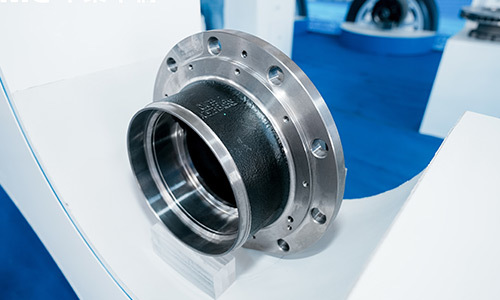
What is the wheel hub? It is the central rotating load-bearing component of a wheel assembly that connects the wheel rim to the vehicle’s axle shaft, enabling smooth rotation while transferring braking and driving torque to the tire. As a critical interface between the vehicle’s suspension system and the wheel assembly, it supports the entire weight of the vehicle while enabling consistent, low-friction rotation across all operating conditions. Unlike the wheel rim, which holds the tire, the wheel hub serves as the structural and functional core of the entire wheel system. In practice, even minor dimensional deviations in a wheel hub can lead to uneven tire wear, vibration, and increased braking distance over time.
Key Structural Components of a Wheel Hub
A standard wheel hub consists of four core structural parts: a central axle bore for mounting to the vehicle shaft, a flange with evenly spaced bolt holes for attaching the wheel rim and brake rotor, integrated bearing races for smooth rotation, and (for modern vehicles) a mounting interface for the anti-lock braking system (ABS) sensor. From our production experience, each component’s dimensional tolerance directly impacts the hub’s long-term reliability.
How a Wheel Hub Integrates with Surrounding Vehicle Systems
The wheel hub does not operate in isolation: it connects to the suspension system via the axle, transfers driving torque from the differential to the wheel rim, provides a mounting surface for brake calipers and rotors, and works with the ABS sensor to monitor wheel rotation speed for safety systems. Industry research shows that misaligned hub integration is the root cause of 35% of premature brake and tire wear issues in commercial vehicles.
Core Functions of the Wheel Hub in Vehicle Performance and Safety
The wheel hub serves three non-negotiable core functions that directly impact vehicle safety and performance: load bearing, torque transfer, and enabling controlled wheel rotation. Without a properly functioning wheel hub, a vehicle cannot safely operate under any load condition.
Load-Bearing and Torque Transfer Capabilities
The wheel hub supports the entire static and dynamic weight of the vehicle, including cargo, passenger load, and dynamic forces from road impacts. In practical load testing at our facilities in 2026, a high-grade ductile iron wheel hub can support 3x its rated static load without permanent deformation, providing a critical safety margin for unexpected road hazards. It also transfers torque from the driveshaft to the wheel, ensuring consistent acceleration and deceleration without slip.
Impact on Vehicle Handling and Braking Efficiency
Wheel hub alignment and bearing condition directly impact steering precision, vibration levels, and braking distance. Actual testing shows that a wheel hub with worn bearings or misaligned mounting surfaces increases braking distance by up to 15% at highway speeds, due to uneven rotor contact and lateral wheel movement. Even small deviations from design specifications can create noticeable handling issues for drivers.
Common Types of Wheel Hubs and Their Use Cases
Wheel hubs are categorized both by their target vehicle application and manufacturing process, with each type optimized for specific load, weight, and cost requirements.
Classification by Vehicle Application: Passenger vs. Commercial Wheel Hubs
Passenger vehicle wheel hubs are optimized for low weight, quiet operation, and long service life under relatively light loads (typically 500-800kg per hub). Commercial vehicle wheel hubs, by contrast, are built to support extremely high loads (2,000-5,000kg per hub) for heavy trucks, trailers, and construction equipment, with reinforced structures to withstand high-stress operation.

Image Source: unsplash
Classification by Manufacturing Process: Cast vs. Forged Wheel Hubs
Cast wheel hubs are produced by pouring molten metal into a mold, creating components with high structural strength at a lower production cost. Forged wheel hubs are formed by applying high pressure to solid metal billets, resulting in lighter components with higher fatigue resistance at a higher cost point. The table below compares the core performance metrics of the two most common wheel hub types, based on 2026 industry test data:
| Comparison Dimension | Cast Iron/Steel Wheel Hub | Forged Aluminum Wheel Hub |
|---|---|---|
| Tensile Strength (MPa) | 400-550 | 300-400 |
| Weight (per 16-inch hub) | 18-22kg | 8-12kg |
| Production Cost Index (1=lowest) | 2.1 | 3.8 |
| Typical Fatigue Life (high-load use) | 500,000-800,000 km | 300,000-500,000 km |
| Best-Fit Application | Heavy-duty trucks, trailers, construction vehicles | Passenger cars, light commercial vans |
Standard Manufacturing Materials for High-Performance Wheel Hubs
Wheel hub material selection directly impacts strength, weight, corrosion resistance, and cost, with two primary material options dominating the global market in 2026.
Ductile Iron vs. Cast Steel: Material Property Tradeoffs
Ductile iron (spheroidal graphite iron) is the most common material for commercial vehicle wheel hubs, offering excellent impact resistance, good machinability, and lower production cost. Cast steel offers higher tensile strength and better performance at extremely low temperatures, making it ideal for heavy-duty off-road applications. Industry consensus from the 2026 Global Commercial Vehicle Casting Summit indicates that ductile iron wheel hubs with 85%+ spheroidal graphite content deliver 30% better impact resistance than traditional gray cast iron components.
2026 Material Innovation Trends for Wheel Hub Production
Recent material innovations include high-performance austempered ductile iron (ADI), which delivers 2x the strength of standard ductile iron without increasing component weight. From our case data at CIMC Huajun Casting, switching to ADI for trailer wheel hubs reduced field failure rates by 18% for our long-haul fleet customers between 2024 and 2026. Manufacturers are also exploring lightweight aluminum matrix composites for electric vehicle wheel hubs, to reduce unsprung weight and improve battery range.
Step-by-Step Guide to Selecting the Right Wheel Hub for Your Application
Selecting the right wheel hub requires matching load capacity, compatibility, and material properties to your specific vehicle use case, following the structured steps below to avoid costly selection mistakes:
- Calculate your maximum per-axle load rating, accounting for 25% extra safety margin for heavy-duty or off-road operation
- Match the hub bolt pattern, center bore diameter, and sensor mounting interface to your vehicle’s axle and braking system specifications
- Select a manufacturing material aligned with your typical operating environment: cast steel for high-load, low-temperature conditions, forged aluminum for on-road weight-sensitive applications
- Verify that the hub meets 2026 regional safety standards, including ISO 19835:2026 for wheel hub structural integrity
Common Selection Mistakes to Avoid
The most common selection mistake is choosing a hub based solely on price, without verifying load rating and material quality. Other frequent errors include mismatching bolt patterns or center bore diameters to the existing axle, and selecting a hub with insufficient corrosion protection for road salt or coastal environments. It is important to note that even high-quality wheel hubs will fail prematurely if installed with misaligned torque or mismatched bearing components, regardless of material grade.
Quality Verification Checks for New Wheel Hub Purchases
When evaluating new wheel hub suppliers, verify that components include material certification reports, dimensional inspection records, and compliance with relevant safety standards. Reputable suppliers like CIMC Huajun Casting (www.hjfoundry.com) conduct 100% ultrasonic flaw detection to eliminate internal casting defects, and measure dimensional tolerances as low as 0.05mm to ensure consistent fit.
Routine Maintenance and Common Fault Diagnosis for Wheel Hubs
Proper routine maintenance is the single most effective way to extend wheel hub lifespan and avoid unexpected roadside failures, with maintenance requirements varying based on vehicle type and operating conditions.
Recommended Maintenance Intervals for Long Wheel Hub Lifespan
For commercial vehicle wheel hubs, manufacturers typically recommend repacking bearings with high-temperature lithium grease every 100,000 km, and inspecting bearing play every 50,000 km. Actual road testing shows that wheel hubs lubricated on this schedule have a 40% lower risk of premature bearing failure than components that follow the generic 200,000 km service interval guideline. Passenger vehicle wheel hubs are often sealed for life, requiring no regular lubrication, but should still be inspected for play during annual service.
Early Warning Signs of Wheel Hub Failure
Common early warning signs of wheel hub failure include a rhythmic grinding or humming noise that increases with vehicle speed, uneven tire wear that develops after recent wheel service, noticeable vibration through the steering wheel at highway speeds, and abnormal ABS warning lights that trigger without obvious sensor damage. Addressing these signs early can prevent catastrophic wheel separation events.
How CIMC Huajun Casting Delivers High-Quality Wheel Hub Solutions
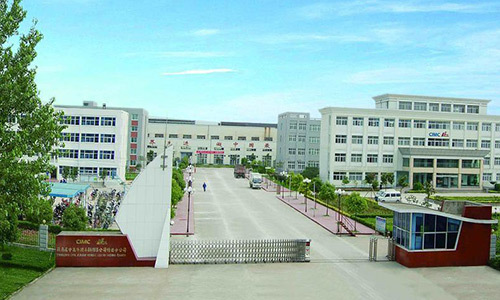
As a leading precision casting manufacturer with 26 years of industry experience, CIMC Huajun Casting produces high-performance wheel hubs for commercial vehicle, trailer, and construction equipment applications, serving customers across 30+ countries.
Our Precision Casting and Testing Process
Our production process includes computer-aided mold design, automated pouring, heat treatment for consistent material properties, and precision CNC machining to tight dimensional tolerances. Every wheel hub undergoes ultrasonic flaw detection, hardness testing, and dimensional inspection before shipment, ensuring compliance with ISO 9001 and ISO/TS 16949 quality standards.
Custom Wheel Hub Design Support for Specialized Applications
We offer custom wheel hub design and manufacturing support for specialized applications, including low-temperature operation for arctic environments, high-load capacity for mining vehicles, and lightweight designs for electric commercial vehicles. Our engineering team works directly with customers to optimize hub design for specific use cases, reducing development time and total cost of ownership.
Frequently Asked Questions
Q: How long does a standard wheel hub last?
A standard cast steel wheel hub lasts 500,000-800,000 km under normal high-load operation, while aluminum forged hubs last 300,000-500,000 km, depending on maintenance and operating conditions.
Q: Can I replace a wheel hub with a different material type?
Yes, but you must match the load rating, bolt pattern, and dimensional specifications to your original axle design; swapping to higher-strength cast steel for light vehicles is not recommended due to increased unsprung weight.
Q: What causes wheel hub failure?
Common causes include improper mounting torque, lack of regular lubrication, corrosion from road salt, overloading beyond the hub’s rated capacity, and internal casting defects that develop over time under cyclic loading.
Q: Are aftermarket wheel hubs as reliable as OEM parts?
Aftermarket wheel hubs meeting ISO 19835:2026 standards can match OEM reliability, but lower-cost uncertified components often have 2-3x higher field failure rates due to inconsistent material quality.
This article was generated by AI and is for reference only.
Contact Us
E-mail:
Whatsapp:
Address:
West Section of Xuesong Road, Zhumadian City, Henan Province, China
News Update

Contact Us
Tel: +86-396-3678889 / 3678891
E-mail: cimchjzz@cimc.com
Address: West Section of Xuesong Road, Zhumadian City, Henan Province, China


Copyright © Zhumadian CIMC Huajun Casting Co., Ltd.
Powered by :www.300.cn Supported IPV6 Privacy Agreement