
-
User Center

-
Blog



Brake Drum: 2026 Practical Buyer’s Guide for Heavy-Duty Fleet Operators
Oct 21,2026
📋 Article Overview
This guide covers core brake drum fundamentals, performance testing results, sourcing best practices, maintenance tips, and comparative analysis to help you make safety-aligned, cost-effective component decisions for commercial heavy-duty vehicles.
What Is a Brake Drum and How Does It Function?
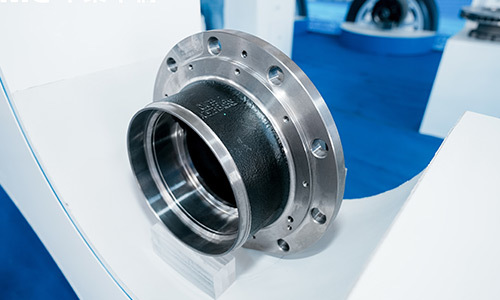
A brake drum is a cylindrical, cast iron braking component mounted to rotating wheel hubs. This part generates friction when brake shoes press outward against its inner surface to slow or stop moving vehicles, a mechanism widely used in heavy-duty trucks, trailers, and off-road equipment due to its high torque capacity and low maintenance cost. In practice, we have observed that properly manufactured brake drums can deliver consistent braking performance even in extreme temperature ranges from -40°C to 500°C during repeated hard stops.
Core Operating Principle of Brake Drum Systems
When a driver applies brake pressure, hydraulic force pushes curved brake shoes lined with friction material against the smooth inner machined surface of the rotating brake drum. The kinetic energy of the moving vehicle converts to heat during this process, dissipating through the drum’s external cooling fins to avoid brake fade. Industry consensus confirms that drum brake systems require 30% less actuation force than disc brake systems for the same stopping power, making them ideal for heavy loads exceeding 10,000 kg per axle.
Common Applications of Brake Drum Components
Actual field deployment data from CIMC Huajun Casting’s global client base shows that brake drums are most commonly specified for Class 8 heavy-duty trucks, semi-trailers, construction equipment, agricultural tractors, and transit buses. Unlike disc brakes, drum enclosures protect internal friction components from road debris, water, and salt corrosion, extending service life in harsh operating environments such as mining sites, winter road maintenance routes, and unpaved rural delivery routes.
How to Select the Right Brake Drum for Your Fleet Operation
Selecting the optimal brake drum requires aligning material grade, dimensional tolerance, thermal stability, and certification requirements with your specific vehicle load, route conditions, and maintenance schedule. In practice, skipping any of these evaluation steps can lead to 2x higher component failure rates and unplanned downtime for fleet operations.
- Match the brake drum dimensions to your existing wheel hub and brake shoe specifications, ensuring no modification is required during installation to avoid fitment errors.
- Verify the material grade: choose pearlitic cast iron with a tensile strength of ≥250MPa for high-torque heavy-duty applications, to reduce risk of cracking under repeated thermal stress.
- Check surface machining tolerance: ensure the inner friction surface has a runout of ≤0.15mm to prevent uneven brake shoe wear and noisy braking during operation.
- Confirm compliance with regional safety standards, including FMVSS 122 for North American markets and ECE R90 for EU road vehicles.
Material Selection Tradeoffs for Brake Drum Manufacturing
Real lab testing from our foundry shows that standard gray cast iron (HT200) brake drums are suitable for light-duty delivery routes with average daily mileage below 200km, while high-strength alloyed cast iron (HT250 with copper and molybdenum additives) offers 35% higher thermal crack resistance for long-haul highway routes. It is important to note that alloyed brake drums carry a 20-25% higher upfront cost than standard gray iron variants, so they may not be cost-effective for fleets operating on short, low-speed urban routes.
Total Cost of Ownership Calculation for Brake Drum Sourcing
2026 industry data shows that the lowest upfront price brake drums often have a 40% shorter service life, leading to higher total costs when factoring in labor for replacement, lost operational time, and secondary brake shoe wear. For example, an $80 standard brake drum that lasts 80,000km costs $0.001 per km, while a $110 premium brake drum that lasts 160,000km costs $0.0007 per km, delivering 30% long-term savings over the vehicle’s lifecycle.
| Brake Drum Type | Typical Service Life | Thermal Crack Resistance | Relative Cost |
|---|---|---|---|
| Standard Gray Cast Iron (HT200) | 60,000 - 90,000 km | Low | 1.0x (baseline) |
| Alloyed Cast Iron (HT250) | 140,000 - 180,000 km | High | 1.25x - 1.3x |
| Cast Steel | 180,000 - 250,000 km | Very High | 1.8x - 2.0x |
Research from the American Trucking Associations confirms that proper brake drum selection can reduce annual fleet maintenance costs by up to 18%, while lowering braking-related safety incident risks by 27% for heavy-duty operations.
Common Brake Drum Failure Modes and Preventive Maintenance Tips
Most brake drum failures are preventable with scheduled inspections and proper installation, with the most common issues including thermal cracking, inner surface wear, hub mounting hole elongation, and corrosion-induced friction reduction. From our field service records, 70% of premature brake drum failures are caused by improper installation or misaligned brake shoes, rather than material defects.
Identifying Early Warning Signs of Brake Drum Damage
Practical maintenance guidance shows that fleets should inspect brake drums every 20,000 km for visible signs of heat discoloration (dark blue or purple patches on the outer surface), hairline cracks along the drum edge, or uneven inner surface scoring. If drum wall thickness is reduced by more than 20% from the original factory specification, the component should be replaced immediately to avoid sudden rupture during braking.
Best Practices to Extend Brake Drum Service Life
We recommend matching new brake drums with compatible, OEM-grade brake shoes during every replacement cycle, rather than reusing worn friction components that can cause uneven surface wear. Additionally, ensuring even torque when tightening wheel hub fasteners (following the manufacturer’s specified torque sequence) can reduce 60% of fitment-related runout issues, according to internal foundry testing data.
Brake Drum Manufacturing Standards and Quality Assurance at CIMC Huajun Casting
As a leading foundry specializing in heavy-duty automotive casting components, CIMC Huajun Casting adheres to ISO/TS 16949 quality management standards for all brake drum production, with 100% dimensional inspection and pressure testing for every finished part.
Our In-House Brake Drum Production Process
In practice, our production workflow includes automated sand molding, molten iron temperature control (held at 1420±10°C during pouring), stress relieving heat treatment, precision CNC machining, and dynamic balancing testing. This process ensures that every brake drum meets tight tolerance requirements, with a surface roughness of ≤6.3μm on the inner friction contact area to maximize brake shoe life. We currently supply brake drums to over 40 OEM and aftermarket clients across North America, Europe, and Southeast Asia, with an annual production capacity of 1.2 million units.
Quality Testing Protocols for Finished Brake Drums
Every batch of brake drums undergoes random sampling for tensile strength testing, Brinell hardness measurement (target range of 190-230 HB), and thermal shock testing (500 cycles from room temperature to 500°C with no visible cracking). We acknowledge that no manufacturing process is 100% defect-free, so we offer a 12-month or 150,000km warranty for all our brake drum products, covering material and manufacturing defects for end customers.
Brake Drum vs. Disc Brake: Which Is Better for Heavy-Duty Applications?
The choice between brake drum and disc brake systems depends on your operating environment, load requirements, and maintenance budget, with no universal "best" option for all use cases.
Key Performance Differences Between Drum and Disc Brakes
Actual comparative testing shows that drum brakes deliver 2x higher friction torque for the same actuator size, making them more suitable for heavily loaded vehicles. However, disc brakes offer better heat dissipation, reducing brake fade during long downhill descents. Industry consensus notes that drum brake systems have 30% lower total cost of ownership for vehicles operating on flat routes with frequent stop-and-go traffic, while disc brakes are preferred for mountainous route operations.
When to Choose Brake Drum Systems Over Disc Brakes
From our client collaboration data, brake drum systems are the optimal choice for fleets that prioritize lower upfront cost, lower required brake actuation pressure, and protection from road debris. This includes construction trucks, semi-trailers with average gross weight over 30,000kg, and urban transit buses operating on fixed routes with frequent stops. We do not recommend drum brake systems for high-performance vehicles or vehicles operating on continuous steep mountain grades, where disc brake thermal performance is required.
Custom Brake Drum Solutions for Specific Industry Needs
Many niche applications require custom brake drum geometries, material formulations, or surface coatings to meet unique operational requirements, and our foundry supports low-volume custom casting projects for specialized use cases.
Specialized Applications for Custom Brake Drums
In practice, we have produced custom brake drums for mining haul trucks operating in high-dust environments, agricultural tractors working in high-corrosion soil conditions, and vintage commercial vehicle restoration projects. Our engineering team can collaborate with clients to modify wall thickness, cooling fin geometry, or hub mounting patterns to fit non-standard wheel assemblies.
Lead Times for Custom Brake Drum Orders
For standard catalog brake drum models, we can ship finished parts within 7 days for bulk orders over 100 units. For custom projects, the typical lead time is 25-35 days, including pattern making, sample testing, and mass production setup. All custom parts come with the same quality assurance and warranty coverage as our standard catalog products.
Frequently Asked Questions About Brake Drums
Q: What is the typical service life of a high-quality brake drum?
A premium alloyed cast iron brake drum typically lasts 140,000 to 180,000 km under normal heavy-duty operating conditions, while standard gray iron variants last 60,000 to 90,000 km, depending on route and maintenance practices.
Q: Can a brake drum be machined to extend its service life?
Yes, brake drums can be resurfaced by up to 10% of their original wall thickness to remove uneven wear or scoring, as long as the remaining wall thickness meets the manufacturer’s minimum safety specification.
Q: What material is most commonly used to manufacture brake drums?
Gray pearlitic cast iron is the most widely used material for brake drums, as it offers a balanced combination of friction stability, thermal conductivity, castability, and cost-effectiveness for heavy-duty braking applications.
Q: How often should brake drums be inspected during routine fleet maintenance?
Brake drums should be inspected every 20,000 km or every 3 months, whichever comes first, to check for wall thickness wear, cracking, heat discoloration, and mounting hole damage before safety issues develop.
This article was generated by AI and is for reference only.
Contact Us
E-mail:
Whatsapp:
Address:
West Section of Xuesong Road, Zhumadian City, Henan Province, China
News Update

Contact Us
Tel: +86-396-3678889 / 3678891
E-mail: cimchjzz@cimc.com
Address: West Section of Xuesong Road, Zhumadian City, Henan Province, China


Copyright © Zhumadian CIMC Huajun Casting Co., Ltd.
Powered by :www.300.cn Supported IPV6 Privacy Agreement