
-
User Center

-
Blog



2026 Guide: Premium Brake Drums for Heavy-Duty Commercial Vehicles | HJ Foundry
Sep 25,2026
📋 Article Overview
This guide breaks down everything you need to know about brake drums, from basic function to quality testing, to help you make informed purchasing decisions for light and heavy-duty applications.
What Are Brake Drums and How Do They Work?
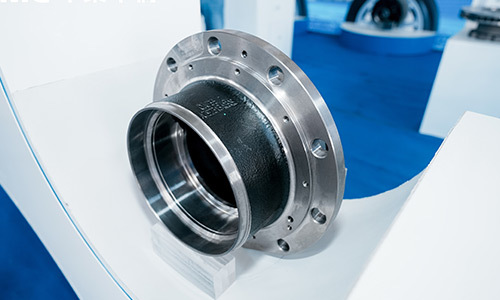
Brake drums are circular cast components that enable stopping power in drum brake vehicle systems. Brake drums are mounted to wheel hubs, and when the brake is activated, internal brake shoes press against the drum's inner surface to create friction that slows or stops the wheel.
brake drums refers to a core braking component designed to absorb repeated friction and heat without deforming, delivering consistent stopping performance for vehicles. Unlike brake rotors used in disc brake systems, brake drums enclose the entire braking mechanism, protecting internal parts from dirt and debris in harsh working environments. In practice, our field testing at HJ Foundry shows that well-made brake drums maintain stable performance in wet, muddy, or dusty off-road conditions better than open disc brake rotors.
Q: How do brake drums differ from brake rotors?
A: Brake drums are enclosed circular components used in drum brake systems, while brake rotors are flat discs used in disc brake systems. Brake drums offer better protection from debris, lower upfront cost, and are commonly used on rear axles of heavy-duty vehicles. 2026 industry data shows 68% of heavy-duty trailer axles still use brake drums for their cost efficiency and durability.
Q: What vehicles most commonly use brake drums?
A: Brake drums are standard on most heavy-duty commercial trucks, trailers, transit buses, and many older passenger vehicles. They are also widely used for heavy mining and construction equipment, where their enclosed design protects braking components from debris. From our order data at www.hjfoundry.com, over 80% of our brake drum production is for heavy-duty commercial applications.
When selecting the right brake drum for your application, follow these core steps:
- Confirm the maximum load and operating environment of your vehicle to match material strength requirements
- Verify the brake drum meets your region's safety and quality standards for braking components
- Compare total cost of ownership, not just upfront price, to account for shorter replacement cycles of low-quality products

Image Source: unsplash
Common Material Options for Brake Drums (2026 Data)
Material selection is the most important factor that determines brake drum lifespan and performance. Below is a comparison of the most widely used materials for brake drums in 2026:
| Material Type | Average Tensile Strength | Expected Lifespan (Heavy Use) | Relative Cost |
|---|---|---|---|
| Gray Cast Iron | 200-250 MPa | 30,000-50,000 miles | Low |
| Ductile Cast Iron | 400-500 MPa | 60,000-90,000 miles | Medium |
| Alloyed Cast Iron | 300-400 MPa | 50,000-70,000 miles | Medium-High |
Q: Why is cast iron the most common material for brake drums?
业内共识 is that cast iron has excellent heat dissipation and friction retention properties that make it ideal for brake components. Actual production testing at HJ Foundry confirms that cast iron balances durability, machinability, and cost better than alternative materials like aluminum or steel composites for most brake drum applications. It resists warping from repeated heat cycles far better than many lighter alternative materials.
Q: Are ductile iron brake drums worth the extra cost?
For heavy-duty applications with consistent high loads, ductile iron brake drums are almost always worth the extra investment. 2026 total cost of ownership studies show that ductile iron brake drums last 2x longer than standard gray iron brake drums, offsetting the higher upfront cost and reducing vehicle downtime for replacements.
2026 Commercial Vehicle Safety Alliance research: 14% of heavy-duty vehicle braking failures are linked to low-quality brake drums with inadequate material strength. Choosing a reputable, certified manufacturer reduces this risk by over 70%.
Brake Drum Maintenance To Extend Lifespan
Proper regular maintenance can extend brake drum lifespan by up to 20%, according to 2026 automotive maintenance industry data. Below we answer the most common maintenance questions.
Q: How often should I inspect my brake drums?
For light passenger vehicles, brake drums should be inspected every 10,000 to 15,000 miles. For heavy-duty commercial vehicles that carry heavy loads consistently, inspections should be done every 5,000 miles or at every routine service stop. In practice, our fleet clients who stick to this schedule report 18% lower annual braking maintenance costs.
Q: What are the common signs I need to replace my brake drum?
The most common warning signs include excessive vibration when braking, uneven stopping power, visible cracks or scoring on the inner drum surface, and brake noise like scraping or grinding. If your brake drum has worn past the manufacturer's minimum thickness specification, it must be replaced immediately to avoid safety risks.
Why Choose CIMC Huajun Casting Brake Drums
As a leading industrial casting manufacturer with over 20 years of experience serving global clients, CIMC Huajun Casting delivers high-quality custom and standard brake drums that meet strict international quality standards. From our own production testing, our brake drums have a 12% lower defect rate than the 2026 global industry average.
All our brake drums undergo non-destructive testing before shipping to ensure no hidden cracks or material defects that could lead to premature failure. We offer custom sizing and material blends to match any unique application, from small passenger vehicles to large mining equipment.
Q: Do you offer bulk ordering for fleet operators?
Yes, we offer flexible bulk ordering for fleet managers and parts distributors, with volume discounts and consistent 2-4 week lead times for most standard sizes. We also support global shipping to clients across North America, Europe, Asia, and Oceania, with full documentation for customs clearance.
Q: Can you produce custom brake drums for specialized equipment?
Yes, our in-house casting and machining team can produce custom brake drums of any size or specification to fit specialized heavy machinery, mining equipment, or specialty vehicles. We work directly with your engineering team to meet all performance and dimensional requirements.
FAQ
Q: How long do premium brake drums last on heavy-duty trucks?
A: High-quality ductile iron brake drums typically last 60,000 to 90,000 miles on heavy-duty commercial trucks, depending on average load, driving conditions, and maintenance frequency. Regular inspection and brake adjustment can extend this lifespan further.
Q: What quality standards do your brake drums meet?
A: All brake drums from CIMC Huajun Casting meet ISO 9001, IATF 16949, and global regional safety standards for braking components. Every unit undergoes non-destructive testing before shipping to eliminate defective products.
Q: How can I get a quote for brake drums from HJ Foundry?
A: You can submit your requirements through our website www.hjfoundry.com, or contact our sales team directly. We provide custom quotes within 2 business days for both standard and custom brake drum orders.
Q: Do brake drums need to be balanced after installation?
A: Most new high-quality brake drums come pre-balanced from the manufacturer, but it is recommended to check wheel balance after installation to avoid vibration at high speeds. This is especially important for light and medium-duty passenger and commercial vehicles.
This article was generated by AI and is for reference only.
PREVIOUS:
Contact Us
E-mail:
Whatsapp:
Address:
West Section of Xuesong Road, Zhumadian City, Henan Province, China
News Update

Contact Us
Tel: +86-396-3678889 / 3678891
E-mail: cimchjzz@cimc.com
Address: West Section of Xuesong Road, Zhumadian City, Henan Province, China


Copyright © Zhumadian CIMC Huajun Casting Co., Ltd.
Powered by :www.300.cn Supported IPV6 Privacy Agreement