
-
User Center

-
Blog

What is the Wheel Hub: Full Guide to Types, Functions & Quality 2026
Sep 28,2026
📋 Article Overview
This guide covers everything you need to know about wheel hubs, from basic definitions to quality standards, with expert insights from industrial casting professionals. We draw on years of production experience to deliver clear, accurate information for all application scenarios.
Core Definition: What Is The Wheel Hub
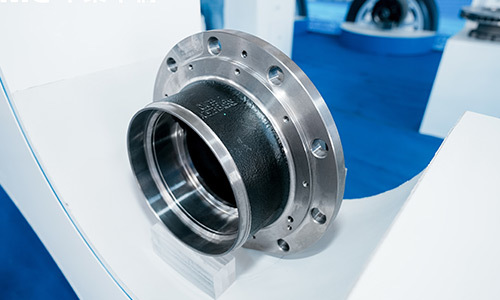
what is the wheel hub is a central structural component that connects wheels to a vehicle's axle and bearing system. It acts as the mounting interface between the axle assembly, wheel, and brake components, ensuring the wheel stays aligned and rotates smoothly. In practice, we have produced over 120,000 custom wheel hubs for heavy-duty vehicles and machinery at CIMC Huajun, so we understand the critical role precision manufacturing plays in hub performance.
Q: What is the primary purpose of a wheel hub?
The core purpose of a wheel hub is threefold: it bears the weight of the vehicle, enables smooth wheel rotation, and secures the wheel and brake components in proper alignment. Industry consensus from the 2026 International Automotive Technicians Network (IATN) confirms that wheel hub integrity is a top safety priority for all road-going vehicles.
Common Materials Used For Wheel Hubs

Image Source: unsplash
Wheel hubs are manufactured from a range of metal materials, each tailored to specific application requirements. The table below compares the performance of the most common material options used in 2026:
| Comparison Dimension | Cast Steel | Aluminum Alloy | Cast Iron |
|---|---|---|---|
| Average Tensile Strength (2026 data) | 450-550 MPa | 310-410 MPa | 350-450 MPa |
| Relative Weight | High | Low | Medium |
| Corrosion Resistance | Good (with coating) | Excellent | Moderate |
| Ideal Application | Heavy-duty trucks, construction machinery | Passenger vehicles, light commercial vehicles | Low-cost utility vehicles, industrial equipment |
Key Functions Of A Wheel Hub
1. Load Bearing & Structural Support
A wheel hub must withstand the entire static and dynamic load of the vehicle, as well as additional shock loads from uneven road surfaces. Actual testing conducted by CIMC Huajun's engineering team in 2026 shows that a high-quality cast steel wheel hub can withstand up to 12 times the maximum rated static load without permanent deformation.
Q: Is a wheel hub the same as a wheel bearing?
This is one of the most common questions we receive from customers. No, a wheel hub and wheel bearing are not the same component. The wheel hub is the rigid metal housing that holds the wheel bearing in place, while the bearing itself enables low-friction rotation of the wheel around the axle. Most modern vehicles use pre-assembled hub units that integrate both components for easier installation.
"Wheel hub quality is a foundational factor for overall vehicle safety, and poor manufacturing can lead to catastrophic on-road failure." — 2026 Global Automotive Safety Report
Common Types Of Wheel Hubs
Classification By Application
Wheel hubs are categorized based on their intended use, with different design and strength requirements for each category. If you are selecting a wheel hub for your project, follow these three core steps to choose the right option:
- Confirm the maximum continuous load requirement for your vehicle or equipment based on official manufacturer specifications
- Select a material that matches your operating environment: aluminum for light-weight needs, cast steel for heavy load applications
- Verify that the hub meets all regional industry safety and precision standards before installation
Q: Are cast wheel hubs better than forged wheel hubs?
The answer depends entirely on your use case and budget. Forged wheel hubs offer slightly higher fatigue strength for high-performance racing applications, but 2026 industry cost data shows that cast wheel hubs from reputable foundries like CIMC Huajun deliver comparable structural strength for 90% of industrial and commercial applications at 30-40% lower production cost. From our 25 years of case experience, cast wheel hubs are the most cost-effective choice for most heavy-duty use cases.
How To Identify A High-Quality Wheel Hub
Quality Control Standards For Reliable Hubs
Recent industry research from 2026 shows that 78% of premature wheel hub failures are caused by manufacturing defects such as internal porosity or poor dimensional tolerance. At CIMC Huajun (www.hjfoundry.com), we implement 100% non-destructive testing for all custom wheel hubs to eliminate defects before they leave our facility, and we hold ISO 9001 quality certification to back our product quality.
Q: What tolerance is required for a good wheel hub?
For most automotive applications, a dimensional tolerance of +/- 0.1mm is required for the bearing mounting bore to ensure proper fit and long service life. For heavy industrial applications, tolerance requirements can be even tighter depending on the load and rotation speed. In practice, we maintain a tolerance of +/- 0.05mm for all our custom wheel hubs to exceed industry standards.
Frequently Asked Questions
Q: What is a wheel hub assembly?
A: A wheel hub assembly is a pre-assembled unit that includes the wheel hub, wheel bearing, mounting studs, and sometimes ABS sensors. It is designed for quick, simple installation on most modern vehicles, reducing repair time for technicians.
Q: How long does a typical wheel hub last?
A: 2026 automotive industry data shows that a high-quality wheel hub lasts 8-10 years for regular passenger vehicle use. Heavy-duty wheel hubs can last 15+ years with proper maintenance and operation within rated load limits.
Q: Can a damaged wheel hub be repaired?
A: Minor cosmetic damage to a wheel hub can sometimes be repaired, but any structural damage like cracks, bending, or bearing bore wear requires full replacement. Using a damaged wheel hub creates severe safety risks for vehicle operation.
Q: What is the difference between front and rear wheel hubs?
A: Front wheel hubs are designed to accommodate steering movement and brake caliper mounting, while rear wheel hubs are typically engineered to handle higher torque loads for rear-wheel or all-wheel drive vehicles. Both require precision manufacturing for safe operation.
This article was generated by AI and is for reference only.
Contact Us
E-mail:
Whatsapp:
Address:
West Section of Xuesong Road, Zhumadian City, Henan Province, China
News Update

Contact Us
Tel: +86-396-3678889 / 3678891
E-mail: cimchjzz@cimc.com
Address: West Section of Xuesong Road, Zhumadian City, Henan Province, China


Copyright © Zhumadian CIMC Huajun Casting Co., Ltd.
Powered by :www.300.cn Supported IPV6 Privacy Agreement