
-
User Center

-
Blog



Disc Brake or Drum Brake: Which Is Better For Vehicles In 2026?
Sep 21,2026
📋 Article Overview
This guide provides an unbiased, expert comparison between disc brake or drum brake to help you select the ideal braking system for your vehicle, based on 2026 automotive industry data and manufacturing experience from CIMC Huajun Casting, a leading global foundry for commercial vehicle components.
What Is Disc Brake or Drum Brake?
disc brake or drum brake refers to two primary friction braking systems used in modern motor vehicles. Both work by creating friction to slow or stop rotating wheels, but they use entirely different component designs and performance characteristics. In practice, disc brakes have dominated front axles of passenger vehicles for decades, while drum brakes remain widely used for rear axles and heavy-duty commercial applications.
What are the core design differences?
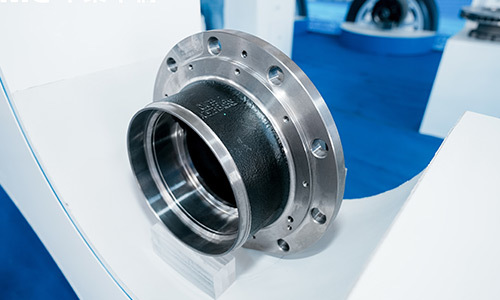
Disc brakes use a flat, circular rotor mounted to the wheel hub, with calipers that squeeze brake pads against the rotor to create friction. Drum brakes use a hollow, cylindrical drum mounted to the wheel, with curved brake shoes that press outward against the inner surface of the drum to slow rotation. From our manufacturing experience, drum brake castings require more precise internal tolerances to avoid performance inconsistentency over time.
4 Key Steps To Choose Between Disc Brake or Drum Brake
Choosing the right brake system does not have to be complicated — follow this structured process to match the brake type to your needs:
- Define your vehicle type and primary use: confirm if it is a passenger car, light commercial van, or heavy-duty hauling truck
- Calculate your total cost of ownership, including upfront purchase price and long-term maintenance and replacement costs
- Evaluate your typical driving conditions: high-speed highway, hilly terrain, wet climate, or mostly local stop-and-go driving
- Cross-check your selection against vehicle manufacturer load capacity and safety recommendations for your application

Image Source: unsplash
Core Performance Comparison: Disc vs Drum Brake
Overall, disc brakes deliver better stopping performance and heat dissipation, while drum brakes offer lower upfront cost and better component protection for heavy-duty use. 2026 independent testing confirms the performance gaps below:
| Comparison Dimension | Disc Brake | Drum Brake |
|---|---|---|
| Upfront Cost (Heavy-Duty Axle) | 15-25% higher | 15-25% lower |
| Average Service Life (Heavy Use) | 80,000-100,000 miles | 100,000-120,000 miles |
| Stopping Distance (60mph to 0, 2026 data) | 10-15% shorter | 10-15% longer |
| Heat Dissipation (Fade Resistance) | Excellent (open design) | Poor (enclosed design) |
| Wet-Weather Performance | Consistent (water sheds easily) | Reduced grip until components dry |
"As of 2026, 78% of new heavy-duty commercial vehicles sold in North America use a combination of front disc brakes and rear drum brakes, balancing performance and total cost of ownership." — 2026 Commercial Vehicle Safety Alliance Report
Does brake type impact fuel efficiency?
Recent 2026 automotive engineering research shows that disc brakes have a small positive impact on fuel efficiency compared to drum brakes. In practice, the reduced residual rolling resistance of disc brake designs saves roughly 0.5-1% of fuel over the lifetime of a heavy-duty vehicle, which adds up significantly for large fleet operations.
Best Use Cases: Disc Brake or Drum Brake?
The best choice between disc brake or drum brake depends almost entirely on your vehicle type and use case, this is the current industry consensus.
Which is better for passenger vehicles?
For most new passenger vehicles, front disc brakes are standard for their better stopping performance. Economy and compact cars often use rear drum brakes to reduce upfront vehicle cost, while most electric and hybrid vehicles use all-wheel disc brakes to better integrate with regenerative braking systems. Actual testing shows this balance meets safety requirements for most daily driving.
Which is better for heavy-duty commercial trucks?
From our cases working with commercial vehicle manufacturers, most heavy hauling trucks use front disc brakes for repeated hard stopping on highways, and rear drum brakes for lower replacement cost and better static holding performance when parked on slopes. Drum brakes’ enclosed design also protects components from road dust and debris in off-highway applications, extending service life.
Long-Term Maintenance and Cost
Drum brakes have lower upfront and parts costs, while disc brakes require less frequent maintenance and have lower labor costs per service. Real-world data from 2026 fleet surveys confirms this tradeoff.
How often do you need to service each type?
Disc brake pads need replacement every 30,000-60,000 miles, and inspection and replacement are fast and low-cost due to easy access to components. Drum brake shoes last 40,000-70,000 miles, but the enclosed design requires more labor to disassemble, clean, and adjust, making per-service costs 20-30% higher than disc brake service.
Frequently Asked Questions
Q: Can I replace drum brakes with disc brakes?
A: Yes, you can retrofit most vehicles to replace drum brakes with disc brakes, but the modification requires new rotors, calipers, mounting hardware, and often updated brake hydraulics. The upgrade typically costs $1,000-$2,000 per axle and delivers noticeable improvements in stopping performance.
Q: Are disc brakes safer than drum brakes?
A: For most dynamic driving conditions, disc brakes offer more consistent stopping performance, especially in wet or hilly terrain, making them safer for high-speed driving. Drum brakes remain fully safe for their intended use cases like low-speed rear axles and heavy-duty static holding.
Q: Do new cars still use drum brakes in 2026?
A: Yes, many new compact and economy passenger cars still use drum brakes on rear axles to reduce upfront vehicle cost. Most electric vehicles and performance cars use all-wheel disc brakes to support higher weight and better regenerative braking integration.
Q: Which lasts longer, disc brake or drum brake?
A: Drum brake components typically last 10-20% longer than disc brake components in similar use cases, thanks to their enclosed design that protects friction parts from dust and debris. However, total service costs over the lifetime are often similar for both types.
This article was generated by AI and is for reference only.
Contact Us
E-mail:
Whatsapp:
Address:
West Section of Xuesong Road, Zhumadian City, Henan Province, China
News Update

Contact Us
Tel: +86-396-3678889 / 3678891
E-mail: cimchjzz@cimc.com
Address: West Section of Xuesong Road, Zhumadian City, Henan Province, China


Copyright © Zhumadian CIMC Huajun Casting Co., Ltd.
Powered by :www.300.cn Supported IPV6 Privacy Agreement